
Custom WordPress Web Development Services: A Complete Guide for Businesses
Custom WordPress web development services have become the go-to solution for businesses that want a website built exactly around their goals, rather than forced into the limitations of a generic template. WordPress powers a huge share of the websites on the internet today, and while pre-made themes work fine for simple blogs or hobby projects, growing businesses often need something more — a site that reflects their brand, performs under real traffic, integrates with their tools, and scales as they expand. That’s where custom WordPress development comes in.
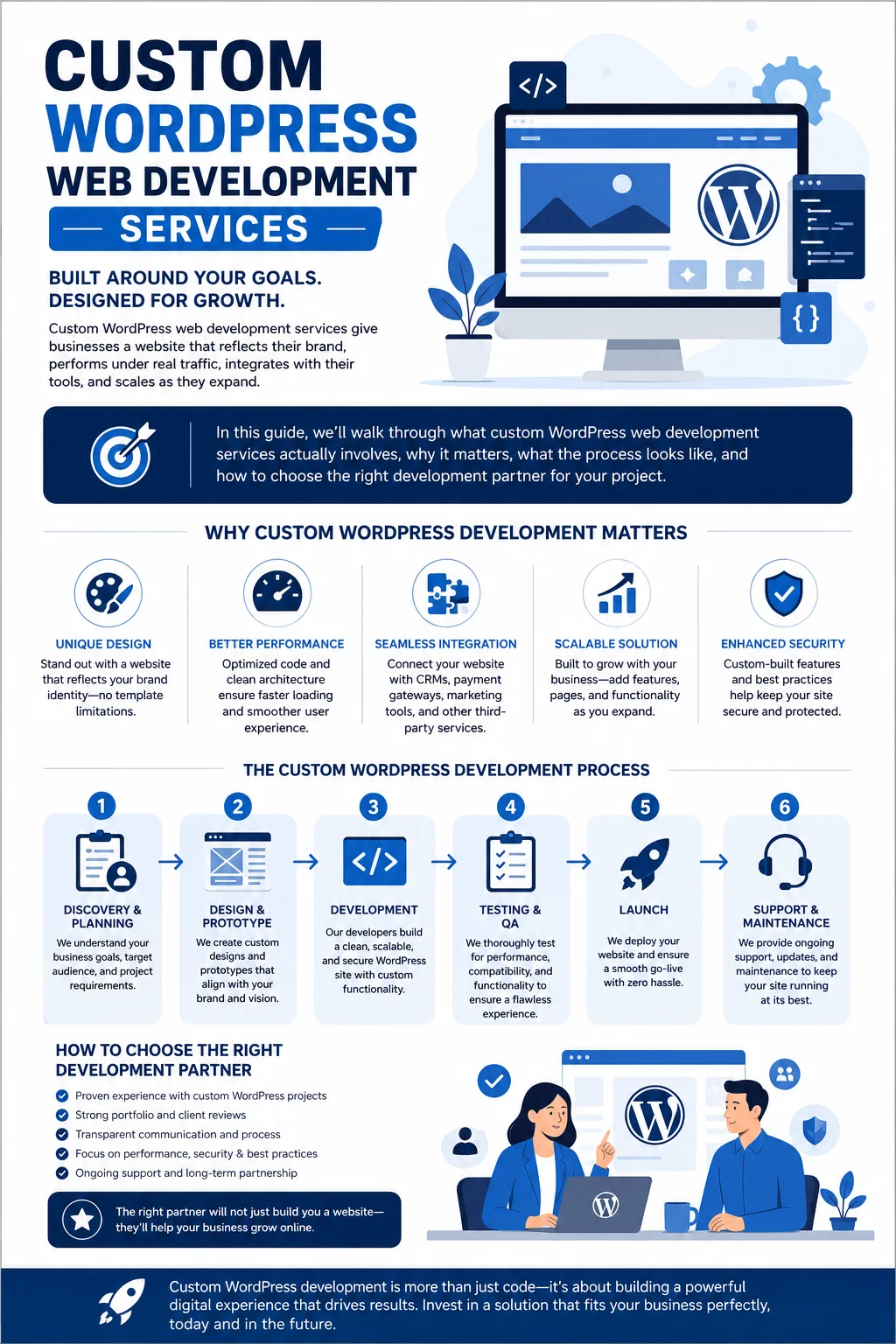
In this guide, we’ll walk through what custom wordpress web development services actually involves, why it matters, what the process looks like, and how to choose the right development partner for your project.
What Are Custom WordPress Web Development Services?
Custom WordPress web development services refer to the process of designing, building, and maintaining a WordPress website that is tailored specifically to a business’s needs, rather than relying entirely on off-the-shelf themes and plugins. This can include custom theme design, bespoke plugin development, unique functionality builds, third-party integrations, performance optimization, and ongoing technical support.
Unlike a basic WordPress setup — where a business might pick a free theme, install a handful of plugins, and call it done — custom development involves a development team writing code, designing layouts, and configuring the backend specifically around a company’s workflows, branding, and long-term goals. The result is a website that looks unique, works exactly as intended, and doesn’t carry the bloat or limitations that often come with generic, one-size-fits-all templates.
Why Businesses Choose Custom WordPress Development Over Off-the-Shelf Themes
1. Unique Branding and Design
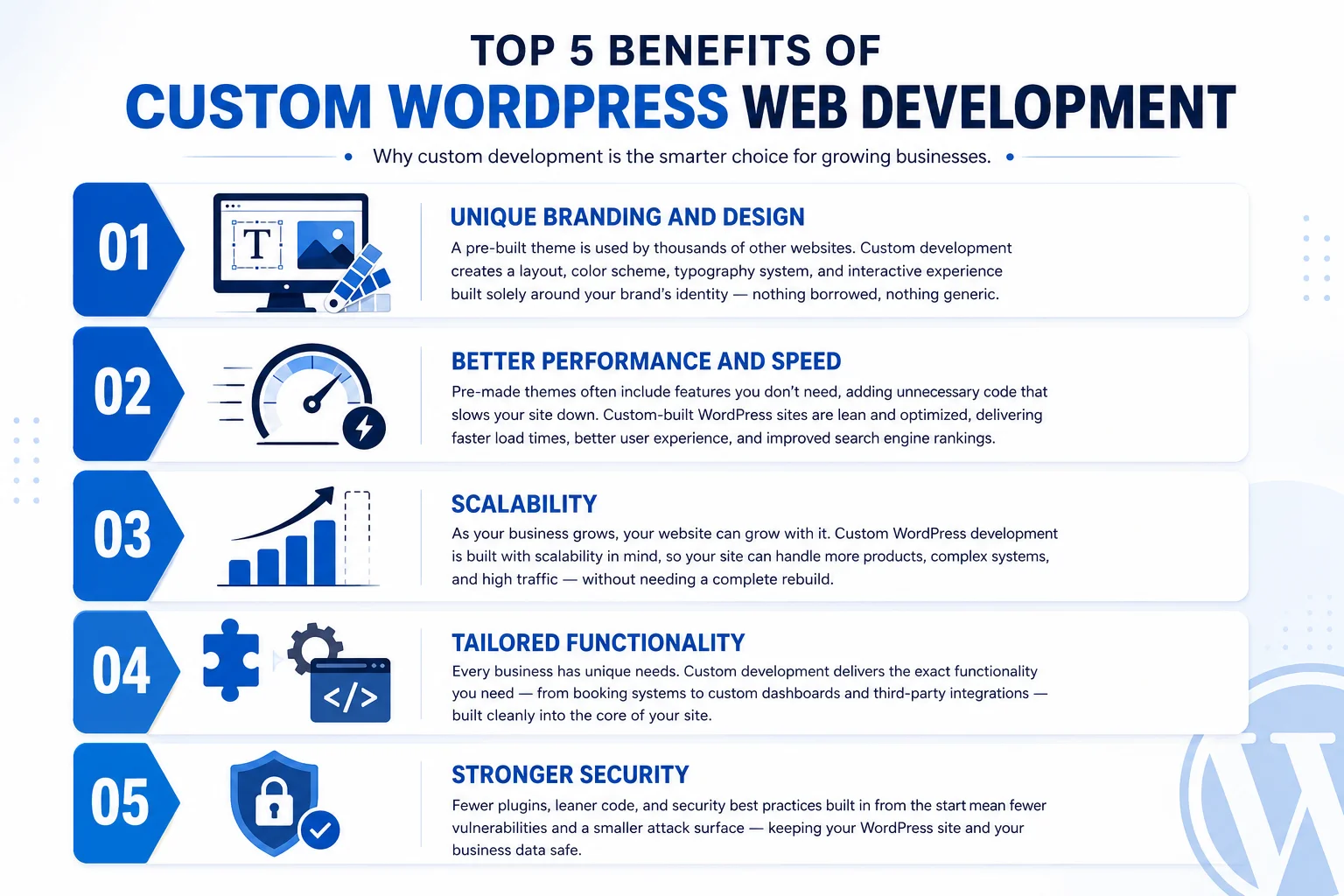
A pre-built theme is, by definition, used by thousands of other websites. Even with customization options, there’s only so much you can change before you hit the theme’s built-in limitations. Custom development removes those ceilings entirely. A development team can design a layout, color scheme, typography system, and interactive experience that is built solely around a brand’s identity — nothing borrowed, nothing generic.
2. Better Performance and Speed
Many pre-made themes come loaded with features a business will never use — sliders, animations, page builders, and shortcodes that add unnecessary code to every page load. This bloat slows down the site, which affects both user experience and search engine rankings. Custom-built WordPress sites are typically leaner, since developers only include the code and functionality that’s actually needed, resulting in faster load times and smoother performance.
3. Scalability
As a business grows, its website needs to grow with it. A generic theme might handle a small catalog or simple content structure fine, but it can struggle once a business adds thousands of products, complex membership systems, or high traffic volumes. Custom WordPress development is built with scalability in mind from the start, so the site can expand without requiring a complete rebuild down the line.
4. Tailored Functionality
Every business has its own operational quirks — a specific booking system, a unique product configurator, an internal dashboard, or a custom integration with a CRM or ERP system. Off-the-shelf plugins often only get you part of the way there, and stacking multiple plugins together to approximate a feature can create conflicts, security gaps, and maintenance headaches. Custom development allows a business to get exactly the functionality it needs, built cleanly into the core of the site.
5. Stronger Security
Generic themes and an excessive number of third-party plugins are common entry points for security vulnerabilities, since each additional piece of code is another potential weak spot. Custom WordPress development services typically involve a leaner codebase, fewer unnecessary dependencies, and security practices built in from the ground up — reducing the overall attack surface of the site.
Core Components of Custom WordPress Web Development Services
Custom Theme Development
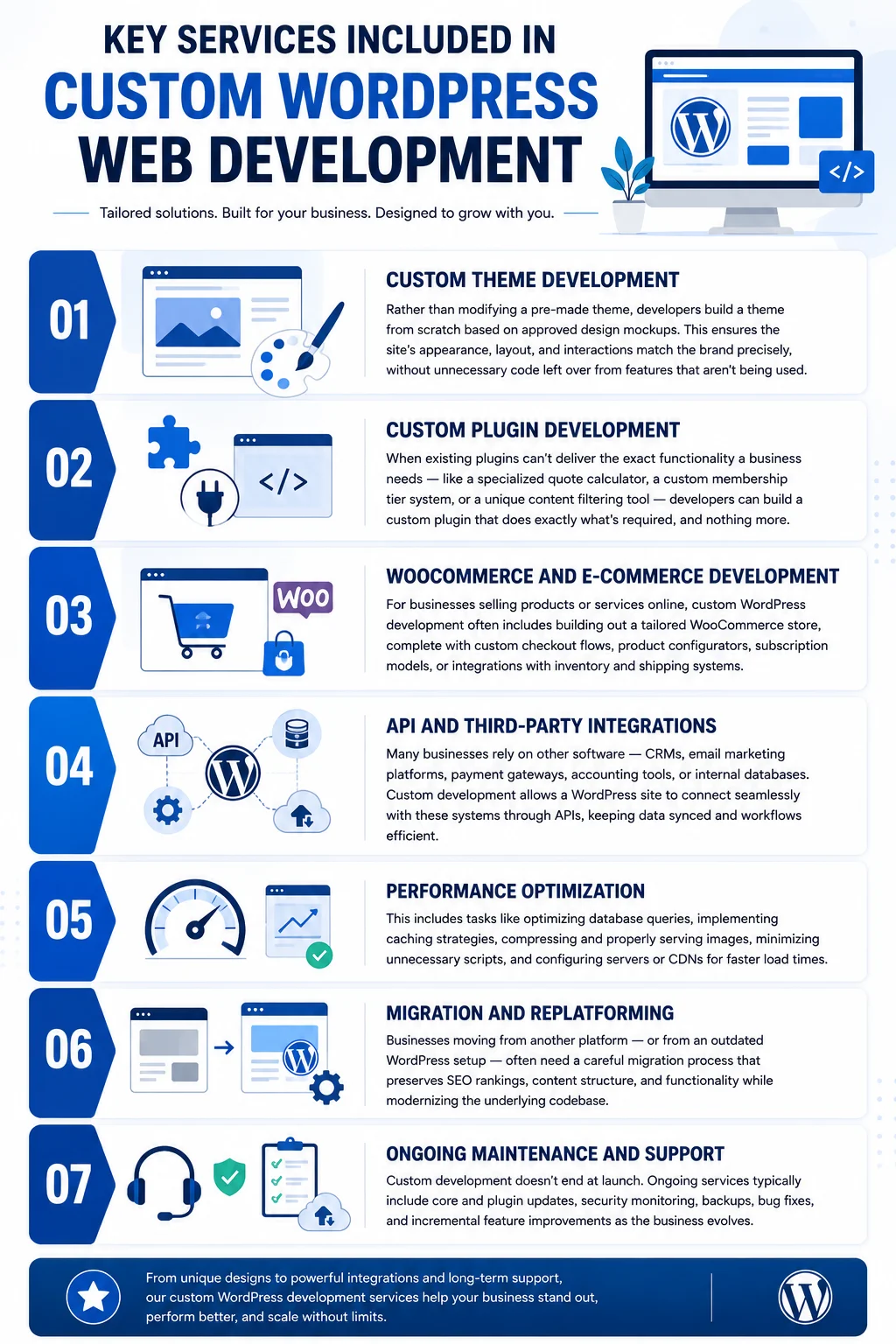
Rather than modifying a pre-made theme, developers build a theme from scratch based on approved design mockups. This ensures the site’s appearance, layout, and interactions match the brand precisely, without unnecessary code left over from features that aren’t being used.
Custom Plugin Development
When existing plugins can’t deliver the exact functionality a business needs — like a specialized quote calculator, a custom membership tier system, or a unique content filtering tool — developers can build a custom plugin that does exactly what’s required, and nothing more.
WooCommerce and E-Commerce Development
For businesses selling products or services online, custom WordPress development often includes building out a tailored WooCommerce store, complete with custom checkout flows, product configurators, subscription models, or integrations with inventory and shipping systems.
API and Third-Party Integrations
Many businesses rely on other software — CRMs, email marketing platforms, payment gateways, accounting tools, or internal databases. Custom development allows a WordPress site to connect seamlessly with these systems through APIs, keeping data synced and workflows efficient.
Performance Optimization
This includes tasks like optimizing database queries, implementing caching strategies, compressing and properly serving images, minimizing unnecessary scripts, and configuring servers or CDNs for faster load times.
Migration and Replatforming
Businesses moving from another platform — or from an outdated WordPress setup — often need a careful migration process that preserves SEO rankings, content structure, and functionality while modernizing the underlying codebase.
Ongoing Maintenance and Support
Custom development doesn’t end at launch. Ongoing services typically include core and plugin updates, security monitoring, backups, bug fixes, and incremental feature improvements as the business evolves.
The Custom WordPress Development Process
While every development team has its own workflow, most custom WordPress projects follow a similar general structure:
1. Discovery and Planning The development team gathers information about the business’s goals, target audience, technical requirements, and existing systems. This phase often includes competitor research and a review of any existing website analytics.
2. Wireframing and Design Before any code is written, designers typically create wireframes and visual mockups so the business can review and approve the layout, structure, and look of the site before development begins.
3. Development Developers build the theme, custom functionality, and any necessary integrations. This stage usually happens on a staging environment, separate from the live site, so nothing is publicly visible until it’s ready.
4. Content Integration Existing content is migrated or new content is added, along with images, product listings, and any other media the site requires.
5. Testing and Quality Assurance The site is tested across browsers and devices, checked for broken links, form functionality, load speed, and mobile responsiveness, and reviewed for security vulnerabilities.
6. Launch Once approved, the site goes live. This often involves DNS changes, SSL configuration, and final performance checks.
7. Post-Launch Support After launch, most development teams offer a support period to address any issues that arise and make adjustments based on real-world usage.
Custom WordPress Development vs. Page Builders: What’s the Difference?
Page builder tools like Elementor or Divi have made it easier for non-developers to assemble WordPress pages visually, and they can be a reasonable choice for very simple sites or tight budgets. However, they come with trade-offs that custom development avoids:
- Code bloat: Page builders often generate extra code to support their drag-and-drop functionality, which can slow down page load times.
- Design limitations: Builders work within predefined blocks and templates, which can make it harder to achieve a truly unique design.
- Long-term reliability: Sites built heavily around a specific page builder can become difficult to migrate or modify if that tool changes its pricing, features, or is discontinued.
- Maintenance complexity: As more plugins and builder add-ons stack up, the site can become harder to maintain and more prone to conflicts.
Custom development trades some of the speed and low upfront cost of page builders for a site that is faster, more unique, and easier to maintain in the long run — a trade-off that tends to pay off for businesses planning to grow.
Industries That Benefit Most from Custom WordPress Development
While nearly any business can benefit from a tailored website, certain industries tend to see the biggest advantages from custom WordPress development services:
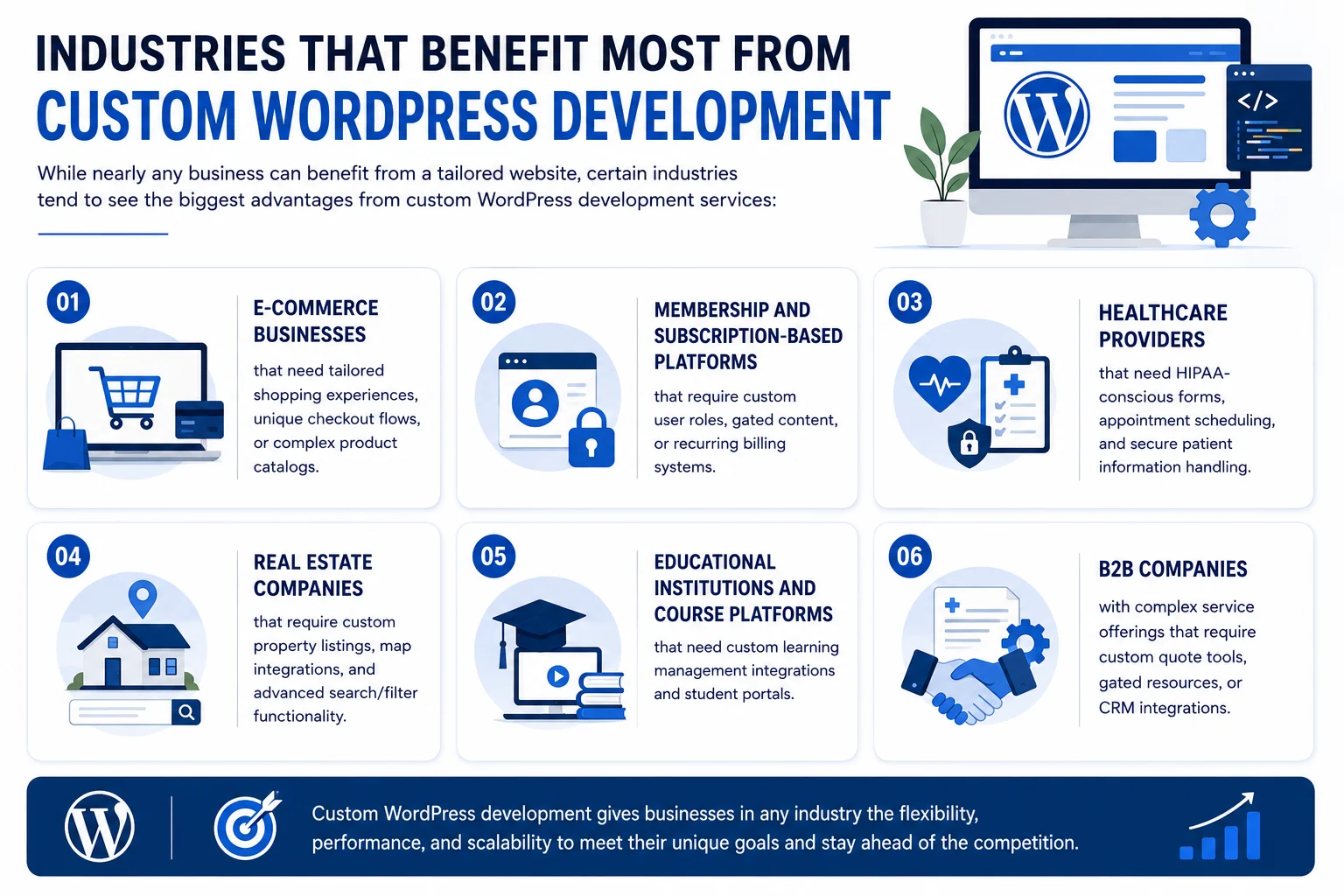
- E-commerce businesses that need tailored shopping experiences, unique checkout flows, or complex product catalogs.
- Membership and subscription-based platforms that require custom user roles, gated content, or recurring billing systems.
- Healthcare providers that need HIPAA-conscious forms, appointment scheduling, and secure patient information handling.
- Real estate companies that require custom property listings, map integrations, and advanced search/filter functionality.
- Educational institutions and course platforms that need custom learning management integrations and student portals.
- B2B companies with complex service offerings that require custom quote tools, gated resources, or CRM integrations.
How Much Do Custom WordPress Web Development Services Cost?
Pricing for custom WordPress development varies widely depending on the scope of the project. A relatively simple custom brochure-style website might cost a few thousand dollars, while a fully custom e-commerce platform with extensive integrations and custom functionality can run into the tens of thousands. Factors that influence cost include:
- The complexity of the design
- The number of custom features or integrations required
- Whether the project involves migrating from an existing platform
- The level of ongoing support and maintenance needed
- The experience level and location of the development team
Rather than choosing the cheapest option available, it’s usually more valuable to think about the long-term return: a well-built custom site can reduce maintenance headaches, improve conversion rates, and avoid the costly rebuild that often comes with an undersized, template-based solution.
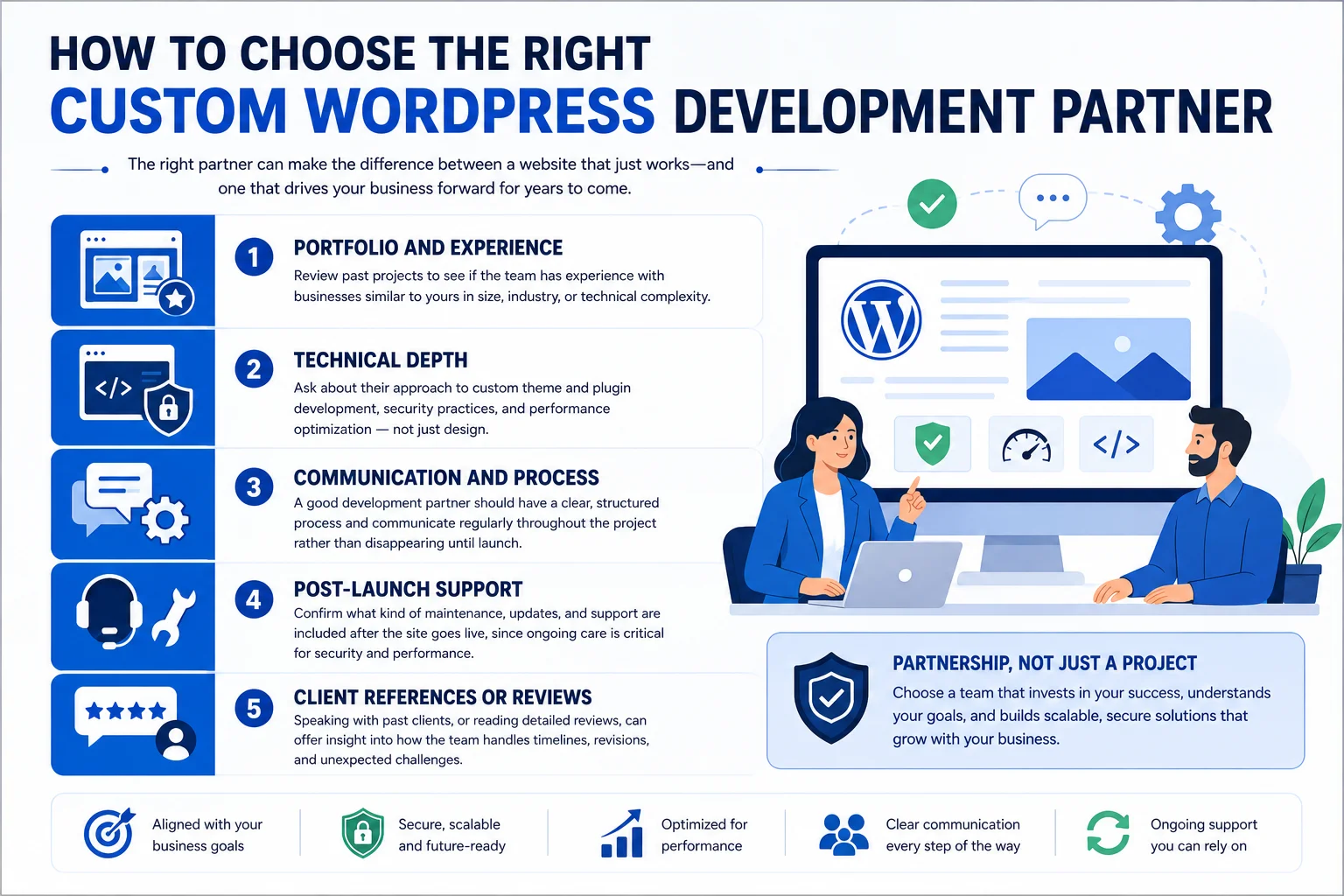
How to Choose the Right Custom WordPress Development Partner
When evaluating a development team or agency for custom WordPress work, consider the following:
Portfolio and experience: Review past projects to see if the team has experience with businesses similar to yours in size, industry, or technical complexity.
Technical depth: Ask about their approach to custom theme and plugin development, security practices, and performance optimization — not just design.
Communication and process: A good development partner should have a clear, structured process and communicate regularly throughout the project rather than disappearing until launch.
Post-launch support: Confirm what kind of maintenance, updates, and support are included after the site goes live, since ongoing care is critical for security and performance.
Client references or reviews: Speaking with past clients, or reading detailed reviews, can offer insight into how the team handles timelines, revisions, and unexpected challenges.
Frequently Asked Questions About Custom WordPress Web Development Services
1. How long does it take to build a custom WordPress website?
Timelines vary based on complexity, but most custom WordPress web development services projects take anywhere from 6 to 16 weeks. A simple brochure site may launch in a month, while a fully custom e-commerce platform with multiple integrations can take three months or longer.
2. Do I need custom WordPress web development services if I already have a theme-based site?
Not always — but if your current site is slow, hard to update, or held back by theme limitations, custom WordPress web development services can rebuild it into something faster, more secure, and easier to manage long-term.
3. Are custom WordPress web development services worth it for small businesses?
Yes, in many cases. Even small businesses benefit from custom WordPress web development services when their growth plans, branding needs, or functionality requirements go beyond what a generic theme can support.
4. What’s included in ongoing custom WordPress web development services?
Most providers of custom WordPress web development services include core and plugin updates, security monitoring, performance checks, backups, and incremental feature improvements as part of an ongoing support package.
5. How do I know if I need custom WordPress web development services or just a page builder?
If your site needs unique functionality, has to scale significantly, or must integrate deeply with other business systems, custom WordPress web development services are typically the better long-term investment over a standard page builder setup.
Signs Your Business Is Ready for Custom WordPress Web Development Services
Not every business needs a fully custom build right away, but there are clear signals that it’s time to invest in custom WordPress web development services:
- Your current site feels slow, outdated, or difficult to update
- You’re relying on a stack of plugins just to approximate features you actually need
- Your business has outgrown its original website structure
- You need tighter integrations with CRMs, payment systems, or internal tools
- Security has become a recurring concern with your current setup
When several of these apply, it’s usually a strong sign that custom WordPress web development services will deliver more value than another round of patchwork fixes.
Common Mistakes to Avoid When Investing in Custom WordPress Development
- Skipping the discovery phase: Jumping straight into design or development without clearly defining goals often leads to costly revisions later.
- Overloading the site with unnecessary features: More functionality isn’t always better — every added feature increases complexity, cost, and potential points of failure.
- Neglecting mobile experience: With a significant share of web traffic coming from mobile devices, a custom site must be built with mobile responsiveness as a priority, not an afterthought.
- Ignoring SEO from the start: Site structure, page speed, and technical SEO elements should be considered during development, not bolted on after launch.
- Underestimating the importance of ongoing maintenance: A custom site still needs regular updates, backups, and monitoring to stay secure and perform well over time.
Final Thoughts
Custom WordPress web development services give businesses the flexibility, performance, and long-term scalability that generic themes and page builders often can’t match. While the upfront investment is typically higher than a basic template-based site, the payoff comes in the form of a faster, more secure, and more distinctive website that’s built to grow alongside the business rather than hold it back.
For companies serious about their online presence — whether that’s driving e-commerce sales, generating leads, or supporting a complex set of business operations — investing in a custom-built WordPress solution is often the difference between a website that merely exists and one that actively contributes to business growth.