
Custom WordPress Website Development: The Complete Guide for Businesses in 2026
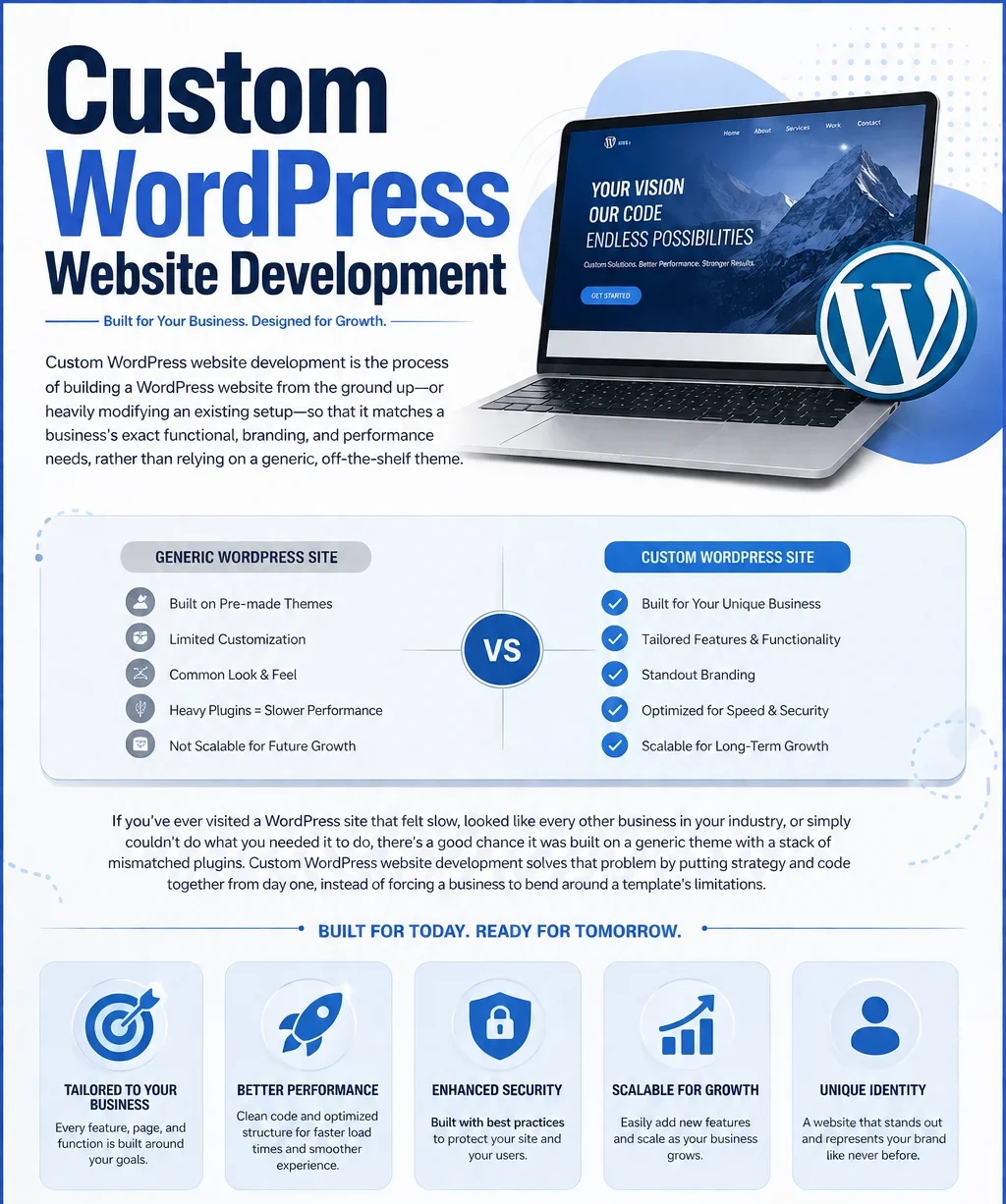
Custom WordPress website development is the process of building a WordPress website from the ground up—or heavily modifying an existing setup—so that it matches a business’s exact functional, branding, and performance needs, rather than relying on a generic, off-the-shelf theme. Unlike pre-built templates that thousands of other websites already use, a custom-developed WordPress site is designed and coded specifically for one business, giving it a unique identity, tailored features, and room to grow.
If you’ve ever visited a WordPress site that felt slow, looked like every other business in your industry, or simply couldn’t do what you needed it to do, there’s a good chance it was built on a generic theme with a stack of mismatched plugins. Custom WordPress website development solves that problem by putting strategy and code together from day one, instead of forcing a business to bend around a template’s limitations.
In this guide, we’ll walk through what custom WordPress website development actually involves, how it differs from theme-based development, the core components that go into a custom build, the typical development process, costs, and how to choose the right development partner.
What Is Custom WordPress Website Development?
At its core, custom WordPress website development means using the WordPress content management system (CMS) as a foundation while building a unique front-end design, custom functionality, and often custom plugins or themes tailored to a specific business. WordPress itself is open-source and highly flexible, which is exactly why it powers such a large share of the web—it gives developers a solid, well-supported backend while leaving nearly unlimited room for customization on top.
A custom WordPress project can range from a fully bespoke theme built line-by-line in code, to a semi-custom approach where a developer starts with a flexible framework or page builder and then heavily modifies it with custom CSS, PHP, and JavaScript. In either case, the goal is the same: a website that behaves and looks exactly the way the business needs it to, not the way a theme author decided it should years ago for a general audience.
This is different from simply installing WordPress, picking a free or premium theme, and adding a handful of plugins. That approach can work for very simple sites, but it comes with real limitations in design flexibility, performance, and long-term scalability—limitations that custom development is specifically designed to avoid.
Custom WordPress Development vs. Theme-Based Development
Understanding the difference between these two approaches helps clarify why so many growing businesses eventually move toward custom development.
Theme-based development typically involves:
- Purchasing or downloading a pre-built theme
- Customizing colors, fonts, and layout options within the theme’s built-in settings
- Installing multiple plugins to add missing functionality
- Working within the structural limits the theme author originally designed
Custom WordPress website development typically involves:
- Designing the site’s look and functionality around the business’s specific goals first
- Writing custom code (PHP, HTML, CSS, JavaScript) to bring that design to life
- Building custom plugins or modifying existing ones so functionality fits precisely, without unnecessary bloat
- Optimizing the codebase specifically for speed, security, and SEO from the start
- Creating a site architecture that can scale as the business adds new features, products, or content types
Theme-based sites are faster and cheaper to launch, which makes sense for very small budgets or simple brochure sites. But as a business grows, theme-based sites often start showing cracks: slow load times from bloated code, design limitations that make the brand look generic, and a growing pile of plugins that conflict with each other or create security vulnerabilities. Custom WordPress website development avoids these issues by building the site the right way from the start.
Why Businesses Choose Custom WordPress Website Development
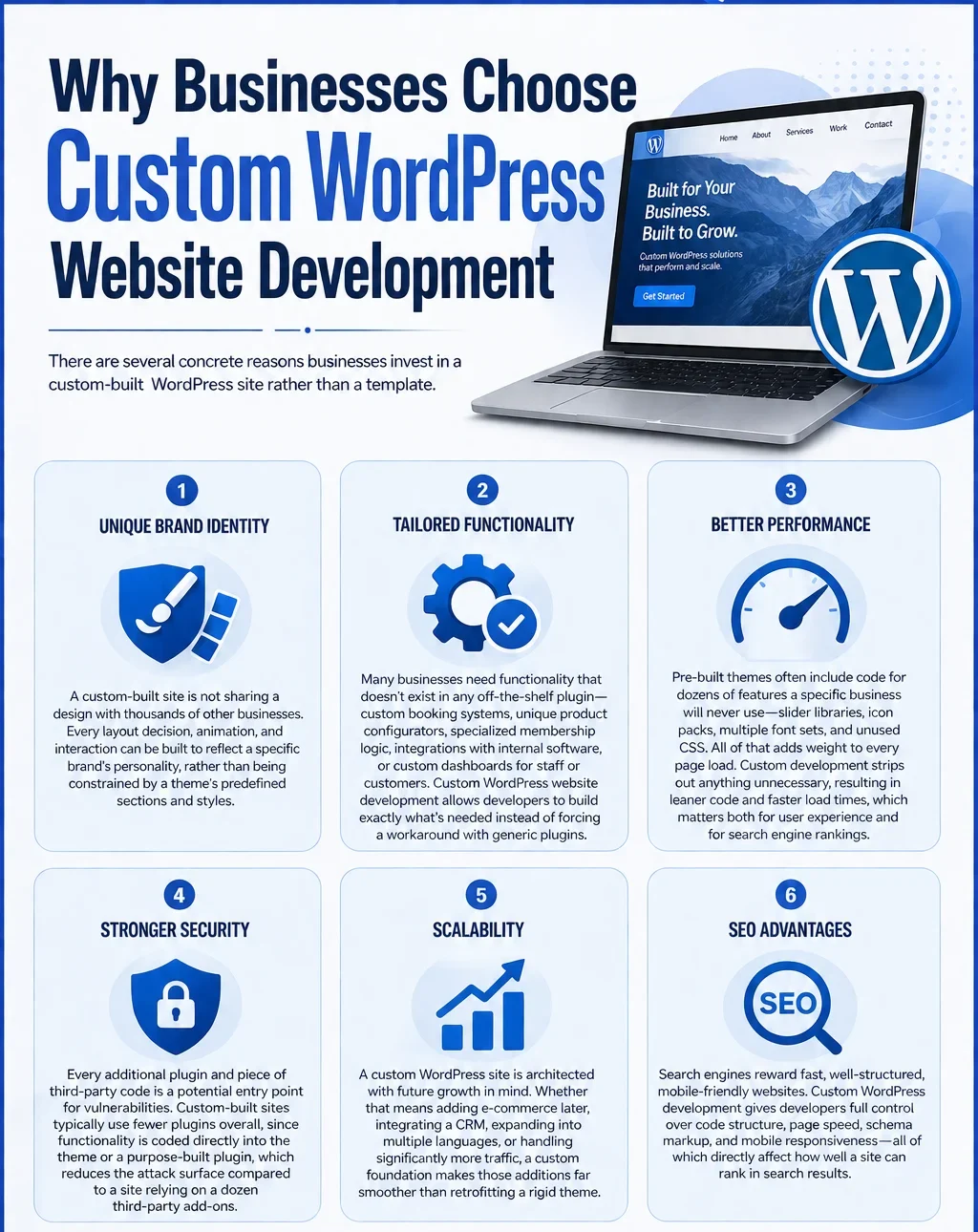
There are several concrete reasons businesses invest in a custom-built WordPress site rather than a template.
1. Unique Brand Identity
A custom-built site is not sharing a design with thousands of other businesses. Every layout decision, animation, and interaction can be built to reflect a specific brand’s personality, rather than being constrained by a theme’s predefined sections and styles.
2. Tailored Functionality
Many businesses need functionality that doesn’t exist in any off-the-shelf plugin—custom booking systems, unique product configurators, specialized membership logic, integrations with internal software, or custom dashboards for staff or customers. Custom WordPress website development allows developers to build exactly what’s needed instead of forcing a workaround with generic plugins.
3. Better Performance
Pre-built themes often include code for dozens of features a specific business will never use—slider libraries, icon packs, multiple font sets, and unused CSS. All of that adds weight to every page load. Custom development strips out anything unnecessary, resulting in leaner code and faster load times, which matters both for user experience and for search engine rankings.
4. Stronger Security
Every additional plugin and piece of third-party code is a potential entry point for vulnerabilities. Custom-built sites typically use fewer plugins overall, since functionality is coded directly into the theme or a purpose-built plugin, which reduces the attack surface compared to a site relying on a dozen third-party add-ons.
5. Scalability
A custom WordPress site is architected with future growth in mind. Whether that means adding e-commerce later, integrating a CRM, expanding into multiple languages, or handling significantly more traffic, a custom foundation makes those additions far smoother than retrofitting a rigid theme.
6. SEO Advantages
Search engines reward fast, well-structured, mobile-friendly websites. Custom WordPress website development gives developers full control over code structure, page speed, schema markup, and mobile responsiveness—all of which directly affect how well a site can rank in search results.
Key Components of a Custom WordPress Website Development Project
A well-executed custom WordPress build generally includes the following components working together.
Custom Theme Development
Rather than modifying a pre-made theme, developers build a theme specifically for the business, often using WordPress’s native theme development standards or a modern block-based approach with the Full Site Editor. This ensures the front-end design matches approved mockups exactly, without the compromises that come from adapting someone else’s template.
Custom Plugin Development
When a business needs functionality that doesn’t exist elsewhere—or exists only in bloated, generic form—developers can build a custom plugin. This keeps the codebase lean, avoids conflicts with unrelated plugin features, and ensures the functionality is maintained specifically for that site rather than depending on a third-party plugin author who might abandon the project.
Custom Post Types and Fields
WordPress allows developers to define entirely new types of content beyond standard posts and pages—think “Properties” for a real estate site, “Menu Items” for a restaurant, or “Case Studies” for an agency. Combined with custom fields, this gives the site owner a clean, purpose-built admin experience for managing their specific type of content.
API Integrations
Many custom WordPress projects need to connect with outside systems—payment gateways, CRMs, email marketing platforms, inventory systems, or internal business tools. Custom development allows these integrations to be built precisely, rather than relying on a generic connector plugin that might not support every needed feature.
Responsive, Accessible Design
Custom development means the site is built and tested specifically for how it will actually be used—across devices, screen sizes, and for users relying on assistive technology—rather than hoping a generic theme’s responsive behavior happens to work well enough.
Performance Optimization
This includes clean, efficient code, optimized database queries, proper image handling, caching strategies, and minimal reliance on heavy third-party scripts—all tailored to the specific site rather than generic, one-size-fits-all settings.
The Custom WordPress Website Development Process
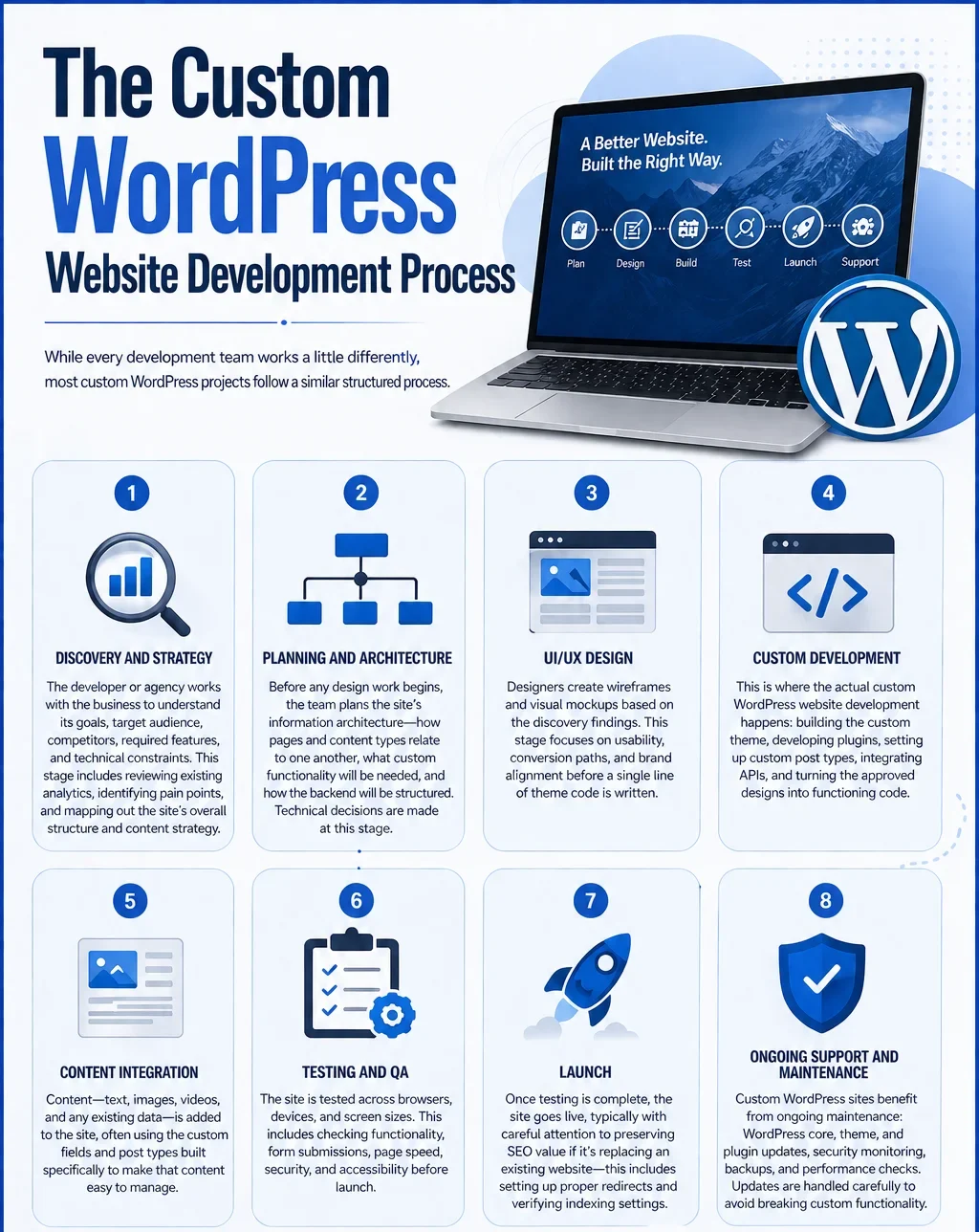
While every development team works a little differently, most custom WordPress projects follow a similar structured process.
Step 1: Discovery and Strategy
The developer or agency works with the business to understand its goals, target audience, competitors, required features, and technical constraints. This stage often includes reviewing existing analytics, identifying pain points with a current site, and mapping out the site’s overall structure and content strategy.
Step 2: Planning and Architecture
Before any design work begins, the team plans the site’s information architecture—how pages and content types relate to one another, what custom functionality will be needed, and how the backend will be structured. This is also when technical decisions get made, such as whether to use a block-based theme, a headless WordPress setup, or a traditional custom theme.
Step 3: UI/UX Design
Designers create wireframes and visual mockups based on the discovery findings. This stage focuses on usability, conversion paths, and brand alignment before a single line of theme code is written.
Step 4: Custom Development
This is where the actual custom WordPress website development happens: building the custom theme, developing any needed plugins, setting up custom post types, integrating APIs, and turning the approved designs into functioning code.
Step 5: Content Integration
Content—text, images, videos, and any existing data—is added to the site, often using the custom fields and post types built specifically to make that content easy to manage.
Step 6: Testing and QA
The site is tested across browsers, devices, and screen sizes. This includes checking functionality, form submissions, page speed, security, and accessibility before launch.
Step 7: Launch
Once testing is complete, the site goes live, typically with careful attention to preserving SEO value if it’s replacing an existing website—this includes setting up proper redirects and verifying that indexing settings are correct.
Step 8: Ongoing Support and Maintenance
Custom WordPress sites benefit from ongoing maintenance: WordPress core, theme, and plugin updates, security monitoring, backups, and performance checks. Because the site is custom-built, updates need to be handled carefully to avoid breaking custom functionality.
Essential Features to Consider for a Custom WordPress Site
Depending on the business, a custom WordPress website development project might include:
- E-commerce functionality built on WooCommerce or a fully custom shopping experience
- Membership and gated content systems for subscription-based businesses
- Multi-language support for businesses serving international audiences
- Advanced search and filtering for sites with large content or product catalogs
- Custom dashboards for logged-in users, clients, or staff
- Booking and scheduling systems for service-based businesses
- Integration with CRMs and marketing tools to keep sales and marketing data in sync
- Custom analytics and reporting tailored to specific business KPIs
Not every site needs all of these, which is part of the point—custom development means only building what’s actually needed, keeping the site fast and maintainable.
SEO Benefits of Custom WordPress Website Development
Search engine optimization and custom development are closely connected, and this is one of the most overlooked advantages of going custom.
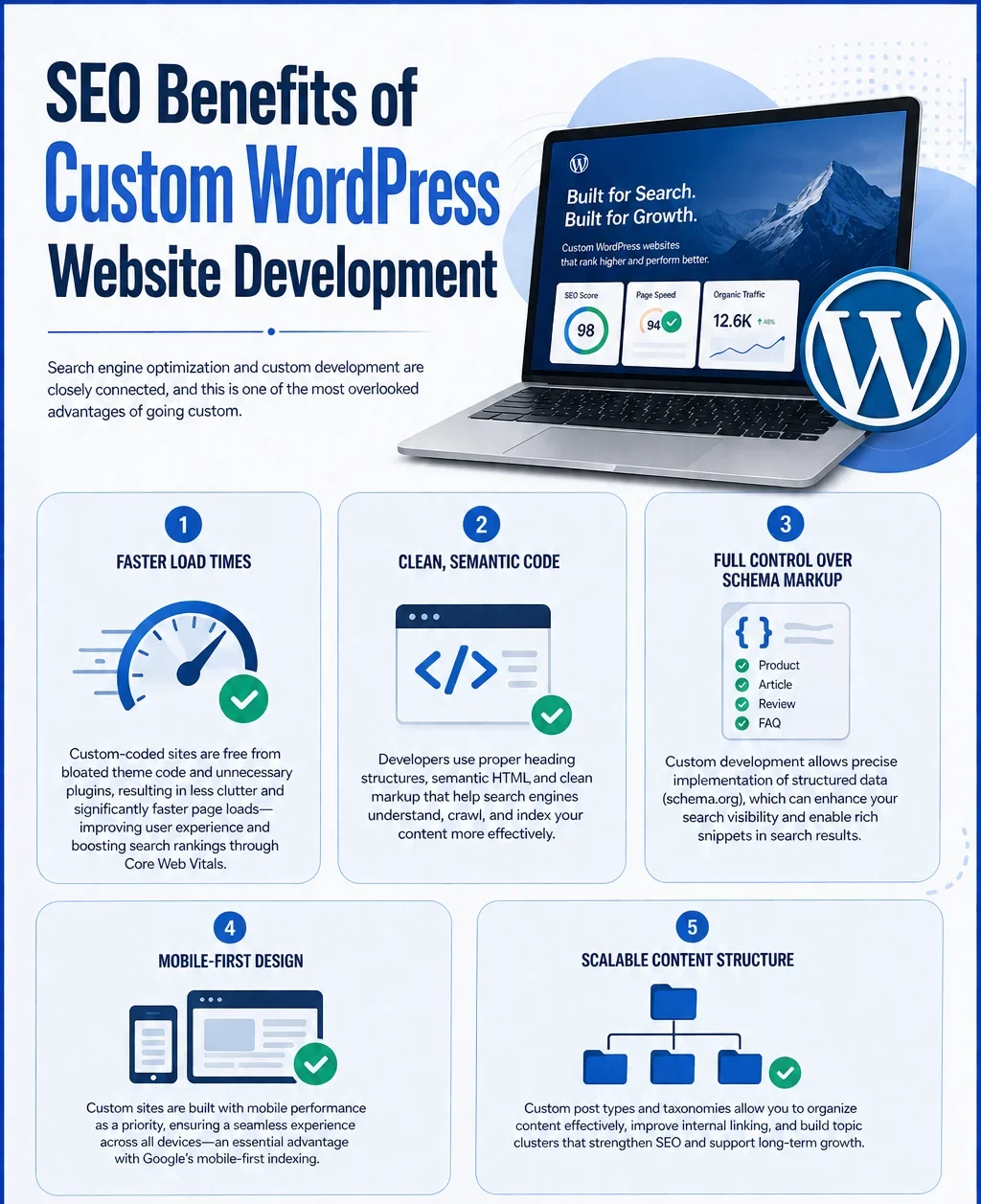
Faster load times. Google has repeatedly emphasized page speed as a ranking factor, particularly through Core Web Vitals. Custom-coded sites, free from bloated theme code and unnecessary plugins, generally load significantly faster than heavily plugin-dependent sites.
Clean, semantic code. Developers can ensure the site uses proper heading structures, semantic HTML, and clean markup—all of which help search engines understand and index content correctly.
Full control over schema markup. Custom development allows precise implementation of structured data (schema.org markup) for products, articles, reviews, FAQs, and more, which can improve how a site appears in search results through rich snippets.
Mobile-first design. Since Google primarily uses mobile-first indexing, a custom site built and tested specifically for mobile performance has a real advantage over a generic theme that merely claims to be “responsive.”
Scalable content structure. Custom post types and taxonomies make it easier to organize large amounts of content in a way that’s both user-friendly and search-engine-friendly, supporting stronger internal linking and topic clustering over time.
Cost Factors in Custom WordPress Website Development
Custom WordPress website development typically costs more upfront than a theme-based site, and the price can vary widely based on several factors:
- Scope of custom functionality – A brochure site with a contact form costs far less than a site with custom booking, e-commerce, and user dashboards.
- Design complexity – Fully custom, animation-heavy designs take more time to build than simpler, content-focused layouts.
- Number of custom post types and integrations – Each additional content type or third-party integration adds development time.
- Content volume – Migrating or creating large amounts of content adds to the overall project timeline and cost.
- Ongoing maintenance needs – Custom sites often benefit from an ongoing support arrangement to handle updates safely.
While the initial investment is higher than picking a $60 theme, businesses often find that custom development pays off through better performance, fewer plugin conflicts, lower long-term maintenance headaches, and a site that doesn’t need to be rebuilt again in two years because it can no longer keep up with the business’s needs.
How to Choose a Custom WordPress Development Partner
Because “custom WordPress development” can mean very different things depending on who’s doing the work, it’s worth evaluating potential developers or agencies carefully.
Look at their portfolio. Genuine custom work should look distinct from site to site—not like the same template with different colors and logos swapped in.
Ask about their development process. A team that can clearly explain discovery, planning, design, and development stages is more likely to deliver a well-architected site than one that jumps straight to “let’s start building.”
Check their approach to plugins. A good custom developer uses plugins thoughtfully—not zero plugins, which is unrealistic, but not dozens of overlapping ones either. They should be able to explain why each one is there.
Ask about performance and SEO practices. Since these are two of the biggest advantages of custom development, a knowledgeable developer should be able to speak specifically about how they optimize for speed, Core Web Vitals, and technical SEO.
Clarify post-launch support. Custom sites need ongoing care. Understand what happens after launch—who handles updates, backups, and troubleshooting if something breaks.
Review communication and documentation practices. Since custom code is unique to your site, good documentation matters. Ask how they document custom functionality so future developers (including your internal team) can understand and maintain the site.
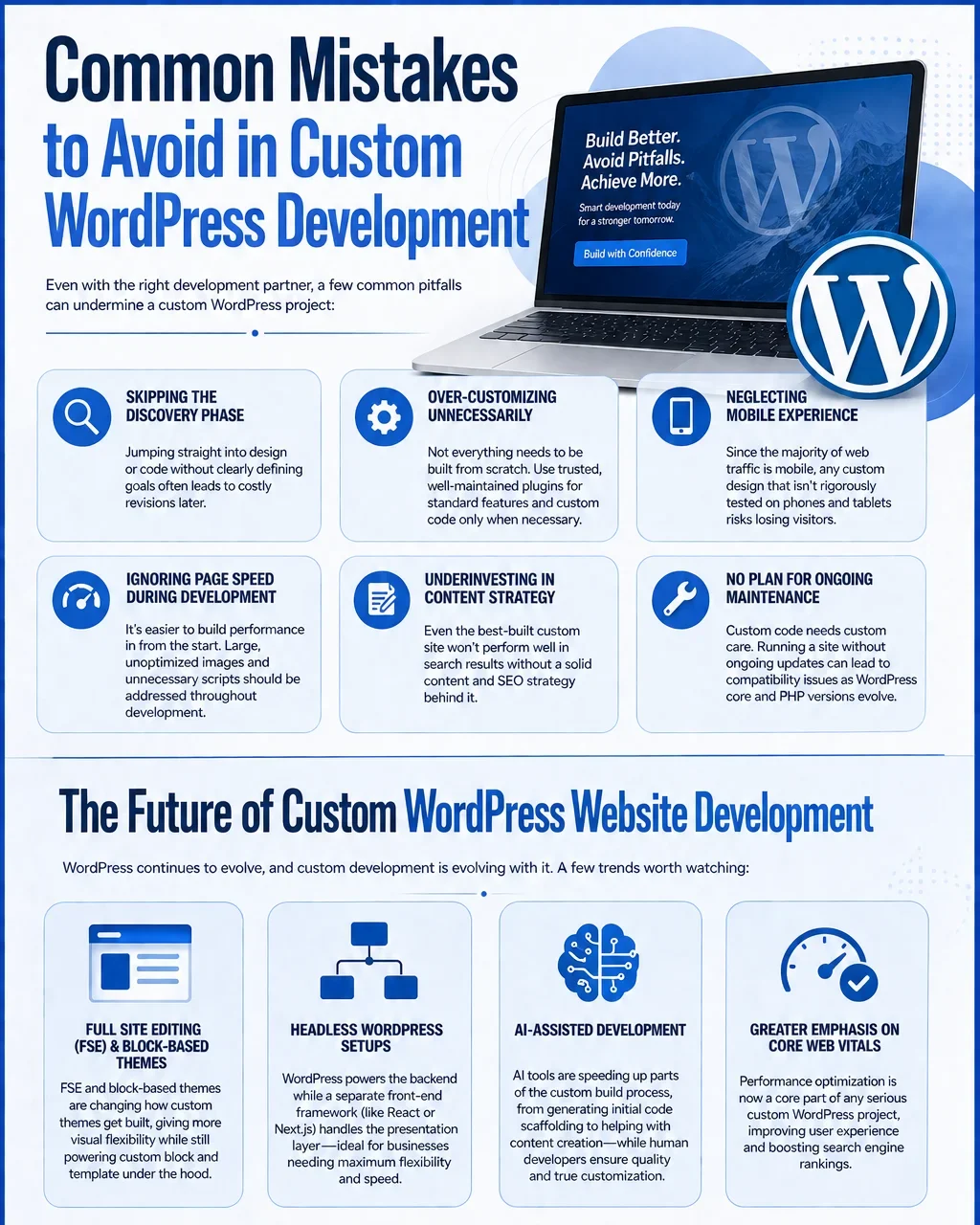
Common Mistakes to Avoid in Custom WordPress Website Development
Even with the right development partner, a few common pitfalls can undermine a custom WordPress project:
Skipping the discovery phase. Jumping straight into design or code without clearly defining goals often leads to costly revisions later.
Over-customizing unnecessarily. Not everything needs to be built from scratch. A skilled developer knows when to use trusted, well-maintained plugins for standard functionality (like forms or SEO basics) versus when custom code is genuinely warranted.
Neglecting mobile experience. Since the majority of web traffic is mobile, any custom design that isn’t rigorously tested on phones and tablets risks alienating a large share of visitors.
Ignoring page speed during development. It’s easier to build performance in from the start than to retrofit it later. Large, unoptimized images and unnecessary scripts should be addressed throughout development, not just at the end.
Underinvesting in content strategy. Even the best-built custom site won’t perform well in search results without a solid content and SEO strategy behind it.
No plan for ongoing maintenance. Custom code needs custom care. Businesses that treat a custom WordPress site as a “set it and forget it” project often run into compatibility issues as WordPress core and PHP versions evolve.
The Future of Custom WordPress Website Development
WordPress continues to evolve, and custom development is evolving with it. A few trends worth watching:
Full Site Editing (FSE) and block-based themes are changing how custom themes get built, allowing more visual flexibility while still relying on custom-coded blocks and templates under the hood.
Headless WordPress setups—where WordPress powers the backend content management while a separate front-end framework (like React or Next.js) handles the presentation layer—are becoming more common for businesses that need maximum front-end flexibility and speed.
AI-assisted development is speeding up parts of the custom build process, from generating initial code scaffolding to assisting with content creation, though human developers remain essential for architecture, quality control, and genuinely custom functionality.
Greater emphasis on Core Web Vitals and page experience means performance optimization is no longer optional—it’s a core part of any serious custom WordPress website development project.
Signs Your Business Needs Custom WordPress Website Development
It isn’t always obvious when a business has outgrown a theme-based site. A few common warning signs tend to show up first.
Your site feels slow no matter what you try. If you’ve already optimized images, installed a caching plugin, and switched hosting providers, but the site still loads slowly, the bottleneck is often the theme and plugin stack itself—something only a rebuild can truly fix.
You keep asking developers to “just make the plugin do this.” When a business repeatedly needs a plugin to behave in ways it wasn’t designed for, that’s usually a sign custom development would be more efficient than continuing to patch a generic tool.
Your design looks like everyone else’s in your industry. Popular themes get reused across thousands of sites, including competitors. If your website doesn’t feel distinct from others in your space, a custom build can address that directly.
You’re managing too many plugins. Some sites accumulate 20, 30, or more plugins over time, many of them overlapping or barely used. This creates security risk, slows the site down, and makes future updates fragile.
You need functionality that simply doesn’t exist as a plugin. Highly specific business logic—custom pricing rules, unique booking workflows, specialized data displays—often can’t be solved with existing plugins, no matter how much you search.
Your current site is difficult or risky to update. If every plugin or theme update raises the fear of “something breaking,” that’s a strong signal the underlying architecture needs to be rebuilt with maintainability in mind.
If two or more of these sound familiar, it’s usually a good time to at least evaluate what a custom WordPress website development project would involve for your specific situation.
Custom WordPress Development for Different Business Types
The right approach to custom WordPress website development often looks different depending on the type of business.
E-commerce businesses typically benefit from a custom WooCommerce build—custom product displays, streamlined checkout flows, and integrations with inventory or fulfillment systems that generic e-commerce themes can’t offer out of the box.
Service-based businesses (law firms, agencies, healthcare providers, consultants) often need custom lead-generation features: tailored contact and booking forms, service-area pages built on custom post types, and integrations with CRM or scheduling software.
Content publishers and media sites benefit from custom taxonomies, advanced filtering, and performance optimization to handle large volumes of content and traffic without slowing down.
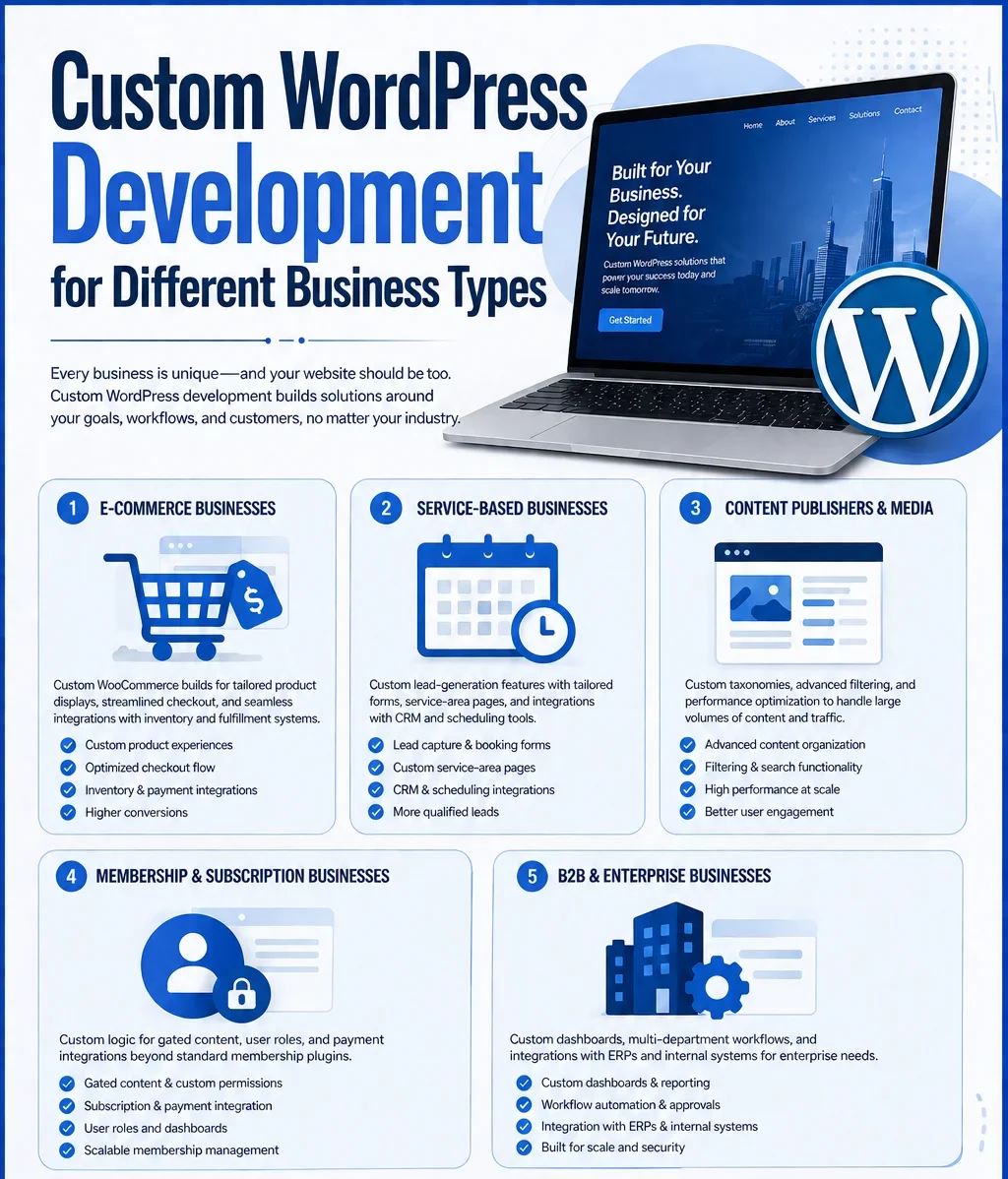
Membership and subscription businesses need custom logic around gated content, user roles, and payment integrations that go beyond what a standard membership plugin can provide.
B2B and enterprise businesses often require custom dashboards, multi-department content workflows, and integrations with internal systems like ERPs or proprietary databases—work that almost always calls for custom development rather than a template.
In each case, the underlying principle is the same: custom WordPress website development starts from the business’s actual workflow and builds the site around it, rather than starting from a template and hoping it’s close enough.
Frequently Asked Questions
Is custom WordPress website development worth it for a small business? It depends on the business’s goals. A very simple site with minimal functionality may be fine on a well-chosen premium theme. But businesses that need specific functionality, strong brand differentiation, or long-term scalability generally benefit from custom development, even at a smaller scale.
How long does a custom WordPress website development project take? Timelines vary widely based on scope—from a few weeks for a straightforward custom brochure site to several months for a complex site with extensive custom functionality, integrations, and content.
Can an existing WordPress site be converted into a custom build? Yes. Many custom WordPress website development projects start as a redesign or rebuild of an existing site, migrating content and preserving SEO value while replacing the underlying theme and functionality with a custom-built solution.
Does custom development mean avoiding plugins entirely? No. Custom development is about using the right combination of custom code and well-chosen plugins—relying on trusted plugins for standard, well-solved problems, and custom code for functionality that’s specific to the business.
Final Thoughts
Custom WordPress website development is ultimately about building a website that works the way a specific business actually operates, rather than forcing the business to adapt to a generic template’s limitations. It takes more planning and investment upfront, but the payoff is a site that’s faster, more secure, more scalable, and more distinctly the business’s own—both visually and functionally.
For businesses that have outgrown a template-based site, or that are starting fresh and want a website built to last, custom WordPress website development offers a level of control, performance, and long-term value that off-the-shelf themes simply can’t match.