
What Is SEO Website Design? A Complete Guide for Beginners
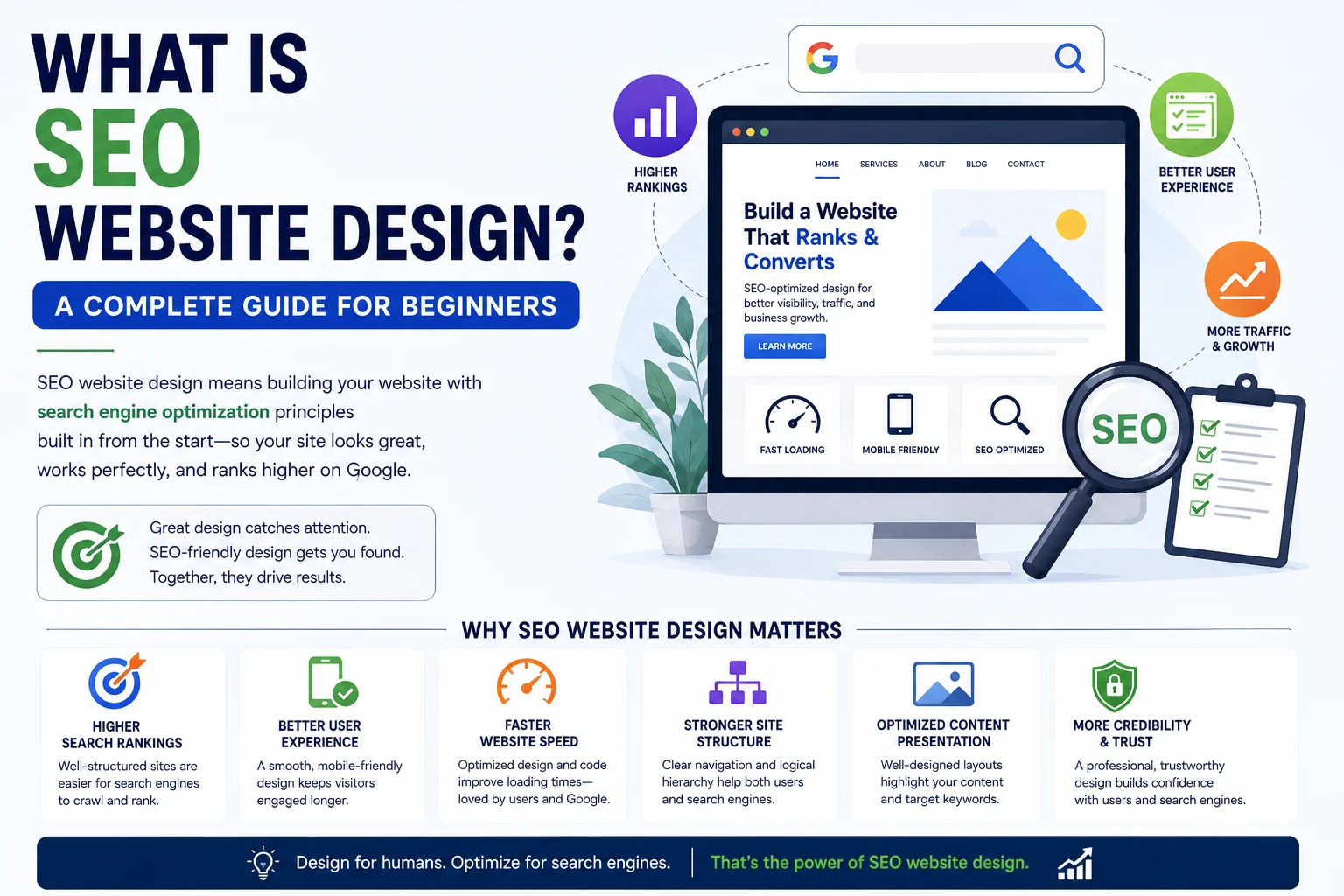
If you’ve ever wondered why some websites rank at the top of Google while others—despite looking just as polished—struggle to get found, the answer often comes down to one thing: SEO website design. So, what is SEO website design exactly? In simple terms, it’s the practice of building a website with search engine optimization principles baked into the design process from the very beginning, rather than treating SEO as an afterthought once the site is already live.
In this comprehensive guide, we’ll break down what SEO website design really means, why it matters, and how you can apply its principles to your own website—whether you’re building a brand-new site from scratch or improving an existing one. By the end, you’ll understand exactly how design decisions influence your search rankings, user experience, and overall business success.
Understanding the Basics: What Is SEO Website Design?
SEO website design is the intersection of two disciplines that are often treated as separate: search engine optimization (SEO) and web design. Traditionally, many businesses would hire a designer to create a visually appealing website first, then bring in an SEO specialist afterward to try to improve its search visibility. The problem with this approach is that many core SEO factors—such as site structure, page speed, mobile responsiveness, and internal linking—are far easier and more effective to implement during the design phase than to retrofit later.
SEO website design flips this process around. It means that every design decision, from the layout of your homepage to the way your navigation menu is structured, is made with search engine visibility in mind, alongside the more traditional goals of aesthetics and usability. The result is a website that not only looks good and functions well for human visitors but is also structured in a way that search engines like Google can easily crawl, understand, and rank.
Why SEO and Web Design Need to Work Together
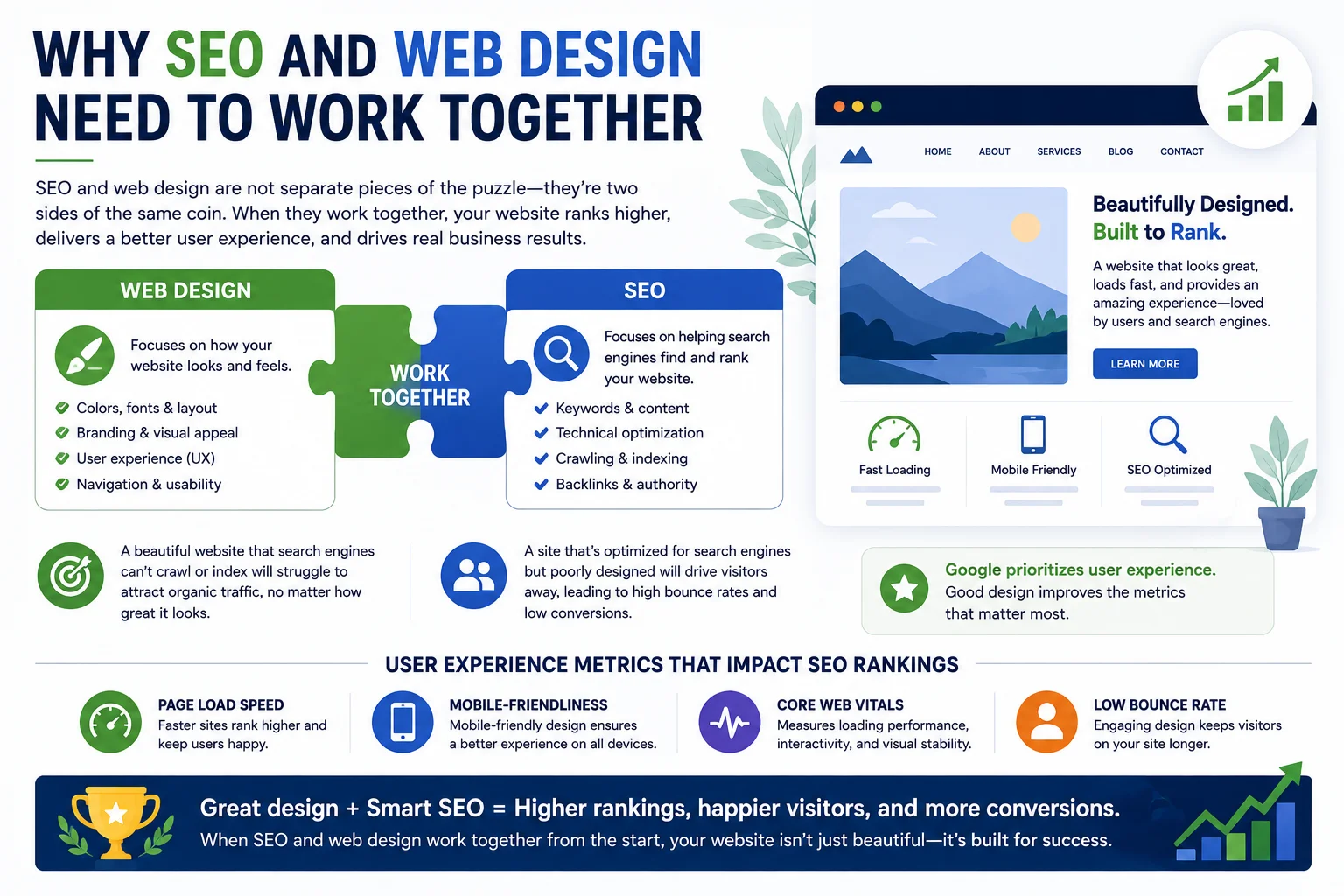
It’s a common misconception that SEO is purely about keywords and backlinks, or that web design is purely about colors, fonts, and layout. In reality, the two are deeply intertwined. A beautifully designed website that search engines can’t properly crawl or index will struggle to attract organic traffic, no matter how good it looks. Conversely, a website that’s technically optimized for search engines but poorly designed will likely suffer from high bounce rates and low conversion rates, since visitors won’t stick around on a site that’s confusing or unpleasant to use.
Search engines like Google have made it increasingly clear that user experience is a significant ranking factor. Metrics like page load speed, mobile-friendliness, and Core Web Vitals (which measure loading performance, interactivity, and visual stability) are all directly influenced by design choices. This means that good design isn’t just about making your site look nice—it’s a fundamental part of your SEO strategy.
Key Elements of SEO Website Design
Let’s break down the core components that make up effective SEO website design. Understanding these elements will help you evaluate your own website or communicate more effectively with a designer or developer.
1. Site Structure and Navigation
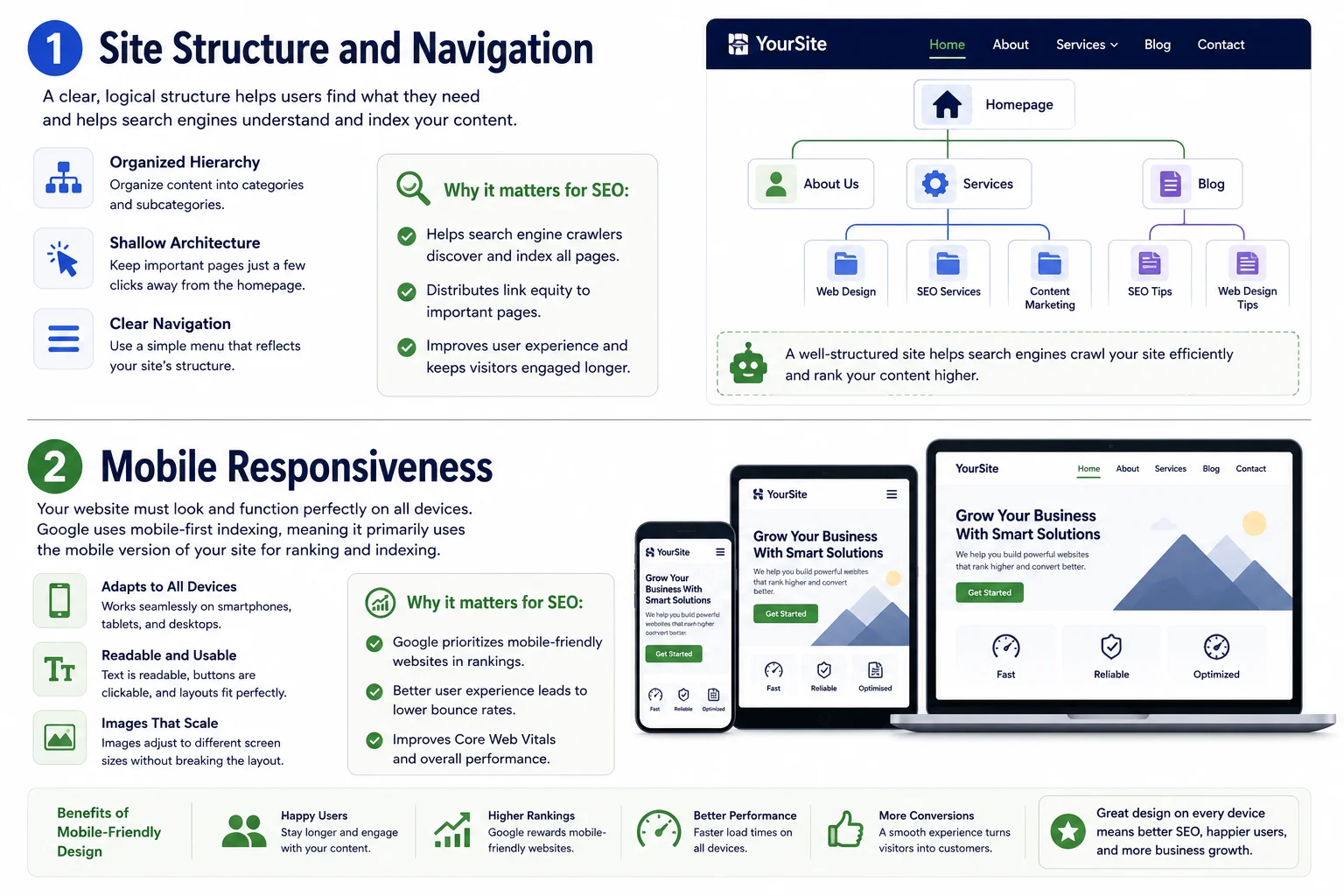
One of the most important aspects of SEO website design is how your website is organized. A clear, logical site structure helps both users and search engines understand what your website is about and how different pages relate to one another. This typically involves organizing content into categories and subcategories, using a shallow site architecture (meaning important pages are just a few clicks away from the homepage), and creating a navigation menu that reflects this hierarchy.
A well-structured site also makes it easier for search engine crawlers to discover and index all of your pages. If your site structure is messy or pages are buried too deep, search engines may struggle to find and rank your content, even if that content is high quality.
2. Mobile Responsiveness
With the majority of web traffic now coming from mobile devices, and Google using mobile-first indexing (meaning it primarily uses the mobile version of your site for ranking and indexing), mobile responsiveness is no longer optional. SEO website design requires that your website adapts seamlessly to different screen sizes, from smartphones to tablets to desktop monitors.
A responsive design ensures that text remains readable, buttons remain clickable, and images scale appropriately, regardless of the device being used. Websites that aren’t mobile-friendly tend to see higher bounce rates and lower rankings, since both users and search engines penalize poor mobile experiences.
3. Page Load Speed
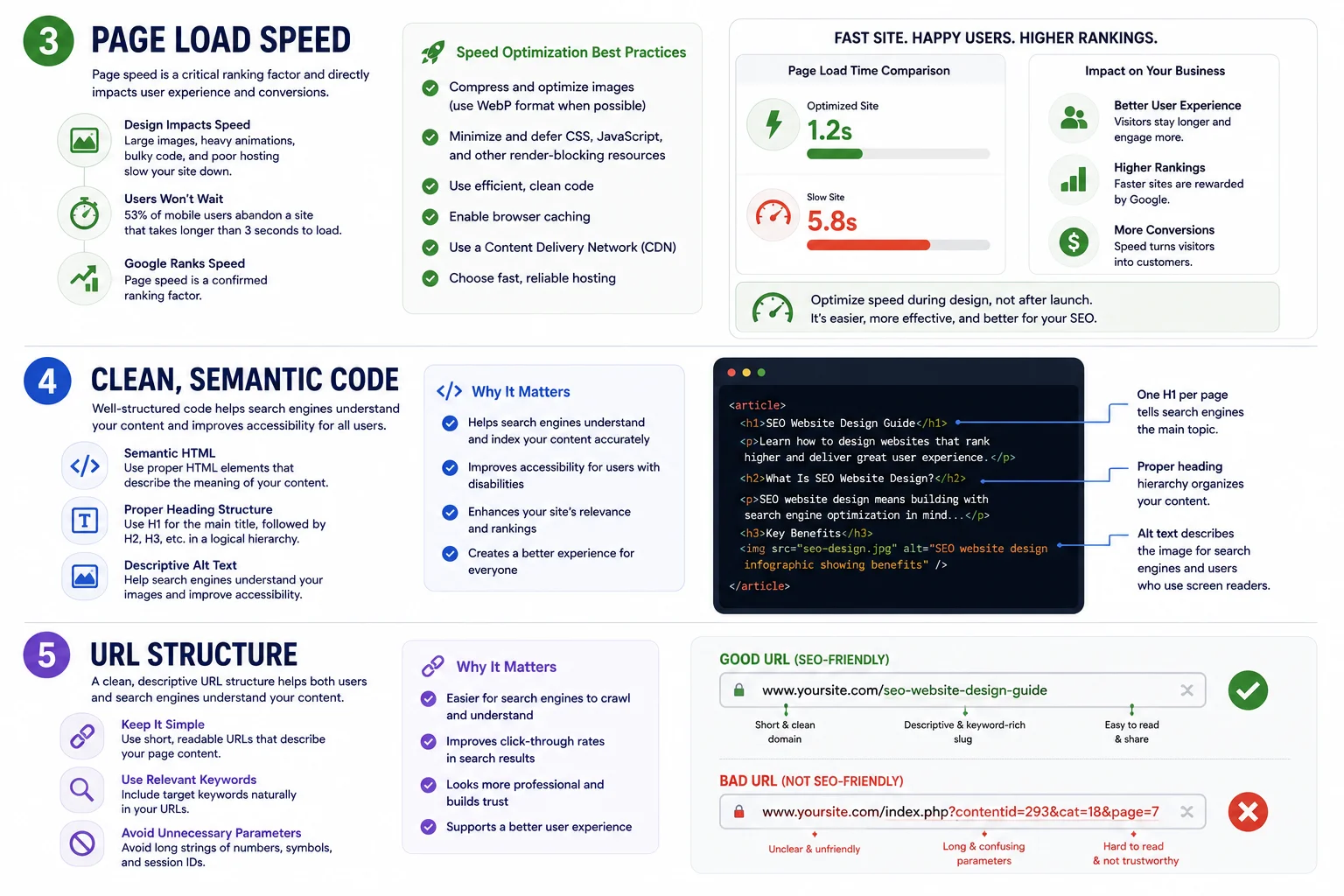
Page speed is one of the most critical technical SEO factors, and it’s heavily influenced by design decisions. Large, unoptimized images, excessive use of animations, bulky code, and poorly configured hosting can all slow down your website. Since Google has confirmed that page speed is a ranking factor, and since slow-loading sites tend to lose visitors before the page even finishes loading, optimizing for speed during the design phase is essential.
Effective SEO website design incorporates speed optimization techniques such as image compression, minimal use of render-blocking scripts, efficient coding practices, and the use of caching and content delivery networks (CDNs) to serve content faster to users around the world.
4. Clean, Semantic Code
The underlying code of your website plays a significant role in how well search engines can understand your content. SEO website design emphasizes clean, semantic HTML—meaning the code uses proper heading tags (H1, H2, H3, etc.), descriptive alt text for images, and organized markup that clearly communicates the structure and meaning of your content to search engines.
Semantic code also improves accessibility for users relying on screen readers or other assistive technologies, making your website more inclusive while simultaneously boosting your SEO performance.
5. URL Structure
Clean, descriptive URLs are another important element of SEO website design. URLs that clearly describe the content of a page—using relevant keywords and avoiding unnecessary parameters or numbers—are easier for both users and search engines to understand. A well-designed URL structure also contributes to a more professional, trustworthy appearance for your website.
6. Internal Linking
Internal links connect different pages within your website, helping both users and search engines navigate your content. Good SEO website design incorporates thoughtful internal linking strategies, guiding visitors toward related content and helping search engines understand the relationships between different pages. This also helps distribute “link equity” throughout your site, which can improve the ranking potential of individual pages.
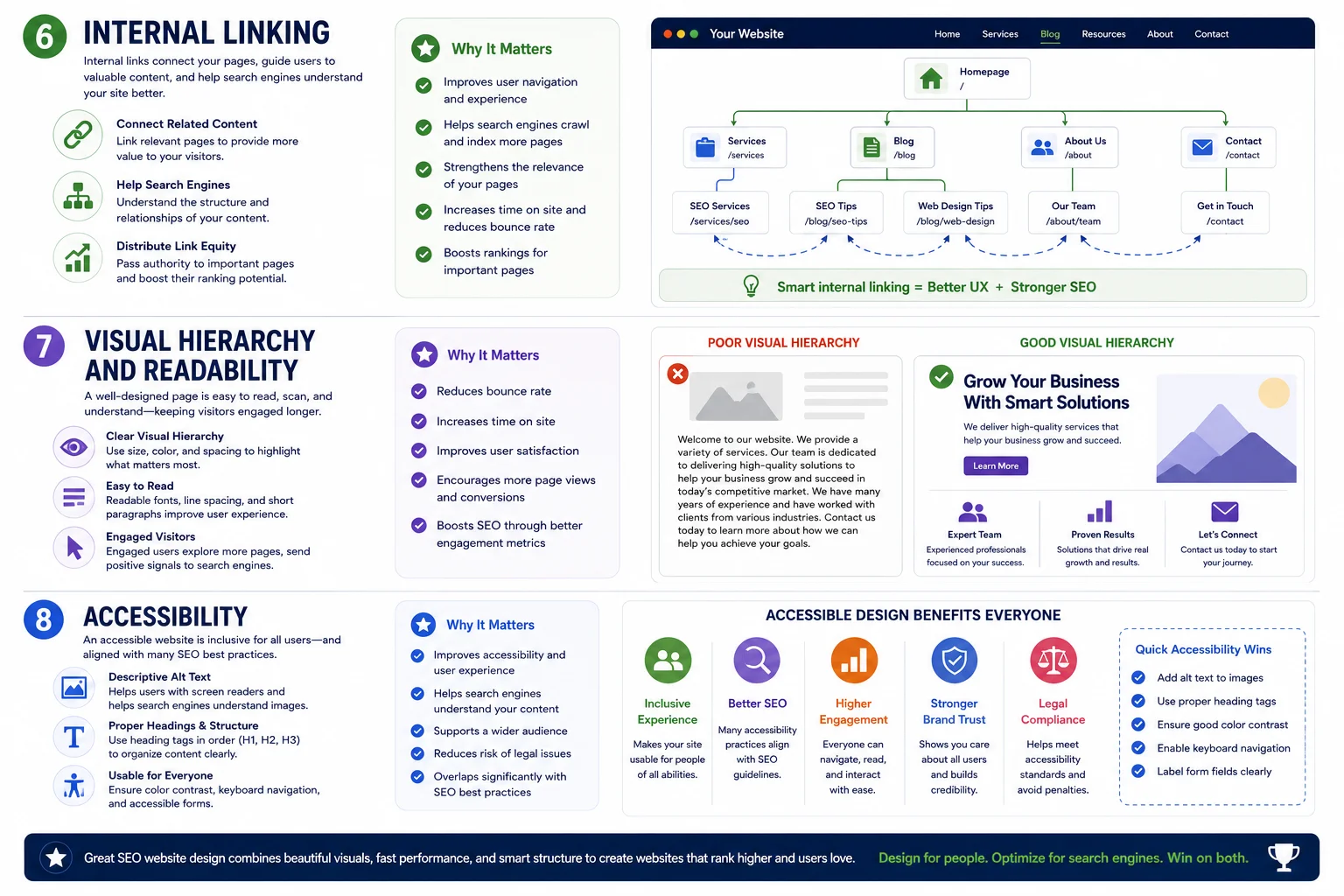
7. Visual Hierarchy and Readability
While this might seem like a purely aesthetic consideration, visual hierarchy—the way content is organized and prioritized on a page using size, color, spacing, and placement—also affects SEO indirectly. Websites that are easy to read and scan tend to keep visitors engaged longer, reducing bounce rates and increasing the likelihood that users will explore multiple pages. This kind of engagement sends positive signals to search engines about the quality and relevance of your content.
8. Accessibility
Designing your website to be accessible to users with disabilities isn’t just good practice ethically and legally—it also overlaps significantly with SEO best practices. Features like descriptive alt text, proper heading structures, sufficient color contrast, and keyboard navigation all contribute to both a more accessible website and a more search-engine-friendly one.
How SEO Website Design Impacts Google Rankings
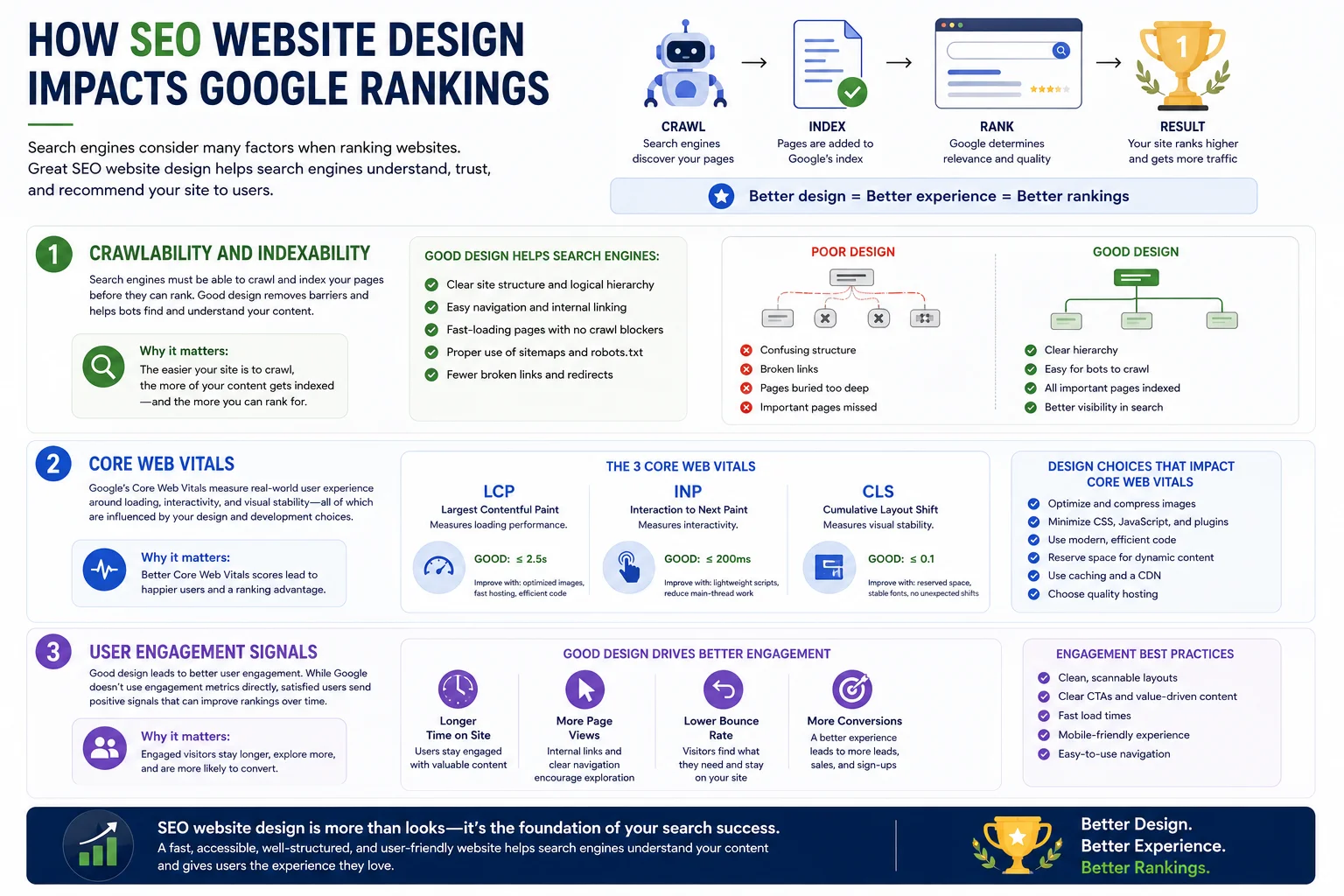
Search engines use complex algorithms to determine which websites deserve to rank for specific search queries. While content quality and relevance remain central to these algorithms, technical and design-related factors play a substantial supporting role. Here’s how SEO website design directly impacts your ability to rank well.
Crawlability and Indexability
Before your website can rank for anything, search engines need to be able to crawl and index your pages. Poor site structure, broken links, and overly complex navigation can create barriers that prevent search engine bots from properly accessing your content. Good SEO website design ensures your site is structured in a way that’s easy for crawlers to navigate, increasing the likelihood that all of your important pages get indexed.
Core Web Vitals
Google’s Core Web Vitals are a set of specific metrics used to measure real-world user experience on a website, focusing on loading performance, interactivity, and visual stability. These metrics are directly influenced by design and development decisions, such as image optimization, efficient code, and stable page layouts that don’t shift unexpectedly as content loads. Websites that score well on Core Web Vitals tend to have an advantage in search rankings.
User Engagement Signals
While Google has stated that it doesn’t directly use metrics like bounce rate as a ranking factor, there’s a strong correlation between good design and positive user engagement, which in turn correlates with better rankings. A well-designed website keeps visitors engaged, encourages them to explore multiple pages, and reduces the likelihood that they’ll quickly return to the search results (a behavior sometimes referred to as “pogo-sticking,” which can indirectly signal to search engines that a page didn’t meet the user’s needs).
SEO Website Design vs. Traditional Web Design
It’s worth clarifying the distinction between SEO website design and traditional web design, since the two approaches can lead to very different outcomes.
Traditional web design often prioritizes visual appeal above all else. Designers may focus heavily on custom graphics, elaborate animations, and unique layouts without necessarily considering how these choices affect page load speed, mobile responsiveness, or search engine crawlability. While the end result might look impressive, it may not perform well in search results or provide the technical foundation needed for long-term organic growth.
SEO website design, on the other hand, takes a more holistic approach. It doesn’t mean sacrificing aesthetics for the sake of search rankings—rather, it means finding a balance where visual design and technical SEO considerations inform one another throughout the entire design process. The goal is to create a website that’s both beautiful and functional from a search engine’s perspective.
Common Mistakes That Hurt SEO Website Design
Even well-intentioned website projects can fall into common traps that undermine SEO performance. Here are some of the most frequent mistakes to watch out for.
Using Flash or outdated technologies: While largely a legacy issue at this point, some older websites still rely on technologies that search engines struggle to crawl and index properly.
Overusing images without optimization: Large, uncompressed images can dramatically slow down page load times, hurting both user experience and search rankings.
Ignoring mobile design: Designing primarily for desktop and treating mobile as an afterthought can lead to a poor mobile experience, which is particularly damaging given Google’s mobile-first indexing approach.
Duplicate content issues: Poorly planned site structures can sometimes lead to duplicate content across multiple URLs, confusing search engines about which version of a page should be ranked.
Complicated navigation: Overly complex or unclear navigation menus can make it difficult for both users and search engines to find important content.
Missing or poorly written meta tags: Meta titles and descriptions are often overlooked during the design phase, even though they play an important role in click-through rates from search results.
Slow-loading third-party scripts: Excessive use of third-party tools, plugins, and tracking scripts can significantly slow down a website if not carefully managed.
Best Practices for Implementing SEO Website Design
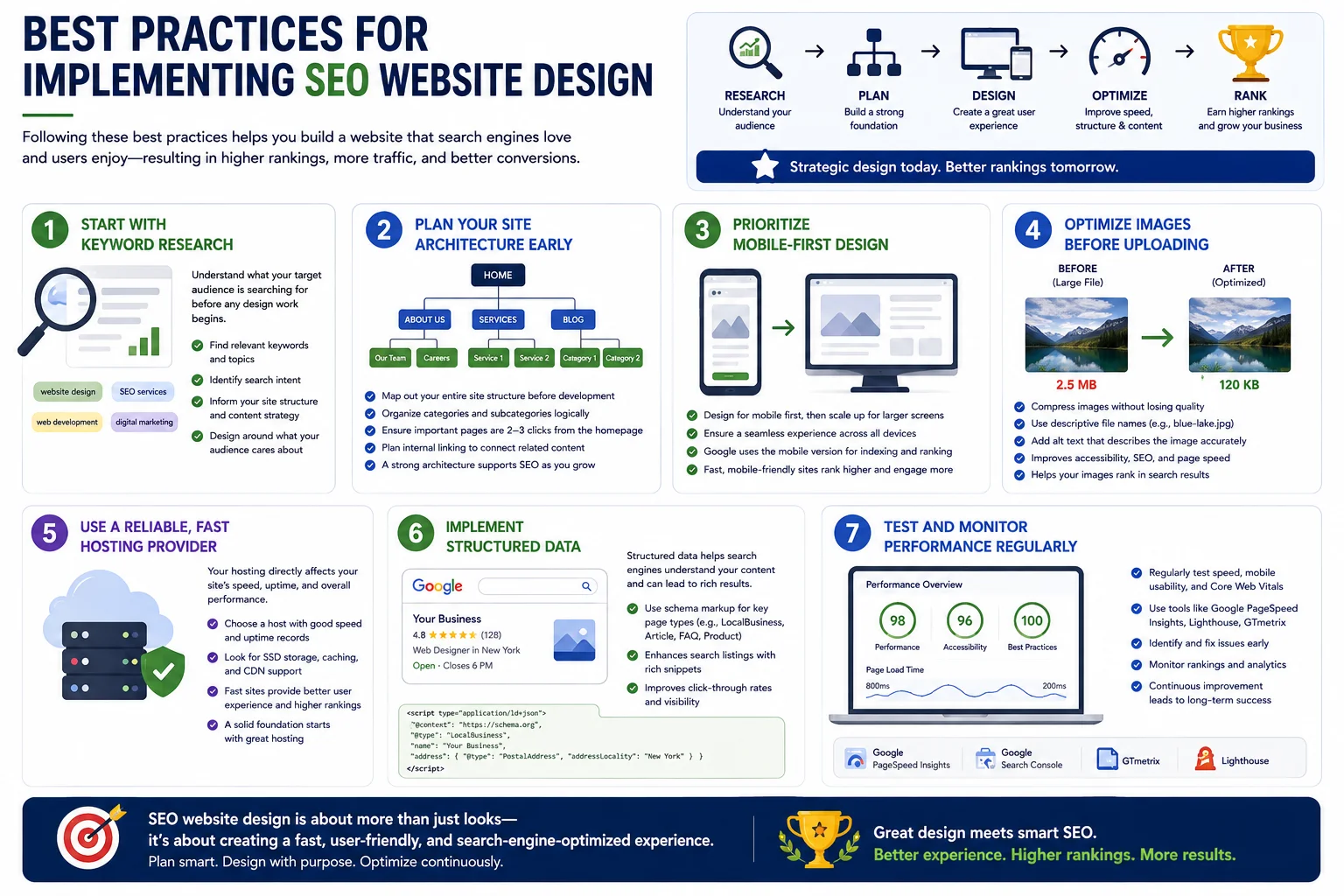
Now that we’ve covered what SEO website design is and why it matters, let’s look at some actionable best practices you can apply to your own website.
Start with Keyword Research
Before any design work begins, it’s important to understand what your target audience is searching for. Keyword research helps inform your site structure, page hierarchy, and content strategy, ensuring that your website is designed around the topics and terms your audience actually cares about.
Plan Your Site Architecture Early
Rather than designing individual pages in isolation, map out your entire site structure before development begins. This includes planning your main navigation categories, subcategories, and how different pages will link to one another. A clear site architecture makes it easier to maintain good SEO practices as your website grows over time.
Prioritize Mobile-First Design
Given Google’s mobile-first indexing approach, it makes sense to design for mobile devices first, then adapt the design for larger screens. This ensures that the mobile experience—which is what search engines primarily evaluate—receives the attention it deserves.
Optimize Images Before Uploading
Compress and properly size images before adding them to your website. Use descriptive file names and alt text that accurately describe the image content, which helps with both accessibility and image search visibility.
Use a Reliable, Fast Hosting Provider
Your choice of web host has a direct impact on your website’s speed and reliability, both of which are important design and SEO considerations. Choosing a hosting provider with strong performance benchmarks and reliable uptime is a foundational step in SEO website design.
Implement Structured Data
Structured data (also known as schema markup) helps search engines better understand the content and context of your pages, which can lead to enhanced search results, such as rich snippets. Incorporating structured data during the design and development phase can give your website an edge in search visibility.
Test and Monitor Performance Regularly
SEO website design isn’t a one-time project—it requires ongoing monitoring and adjustment. Regularly testing your website’s speed, mobile usability, and Core Web Vitals scores can help you identify and address issues before they significantly impact your rankings.
The Role of Content in SEO Website Design
While much of SEO website design focuses on technical and structural elements, content still plays a central role. The design of your website should support and enhance your content, not compete with it. This means using readable fonts, appropriate text sizing, sufficient white space, and a layout that guides visitors naturally through your content.
Headings should be used strategically—not just for visual hierarchy, but to help search engines understand the structure and main topics of your content. A well-designed page uses H1 tags for the main title, followed by logically nested H2 and H3 tags to break content into digestible sections, similar to how this article is structured.
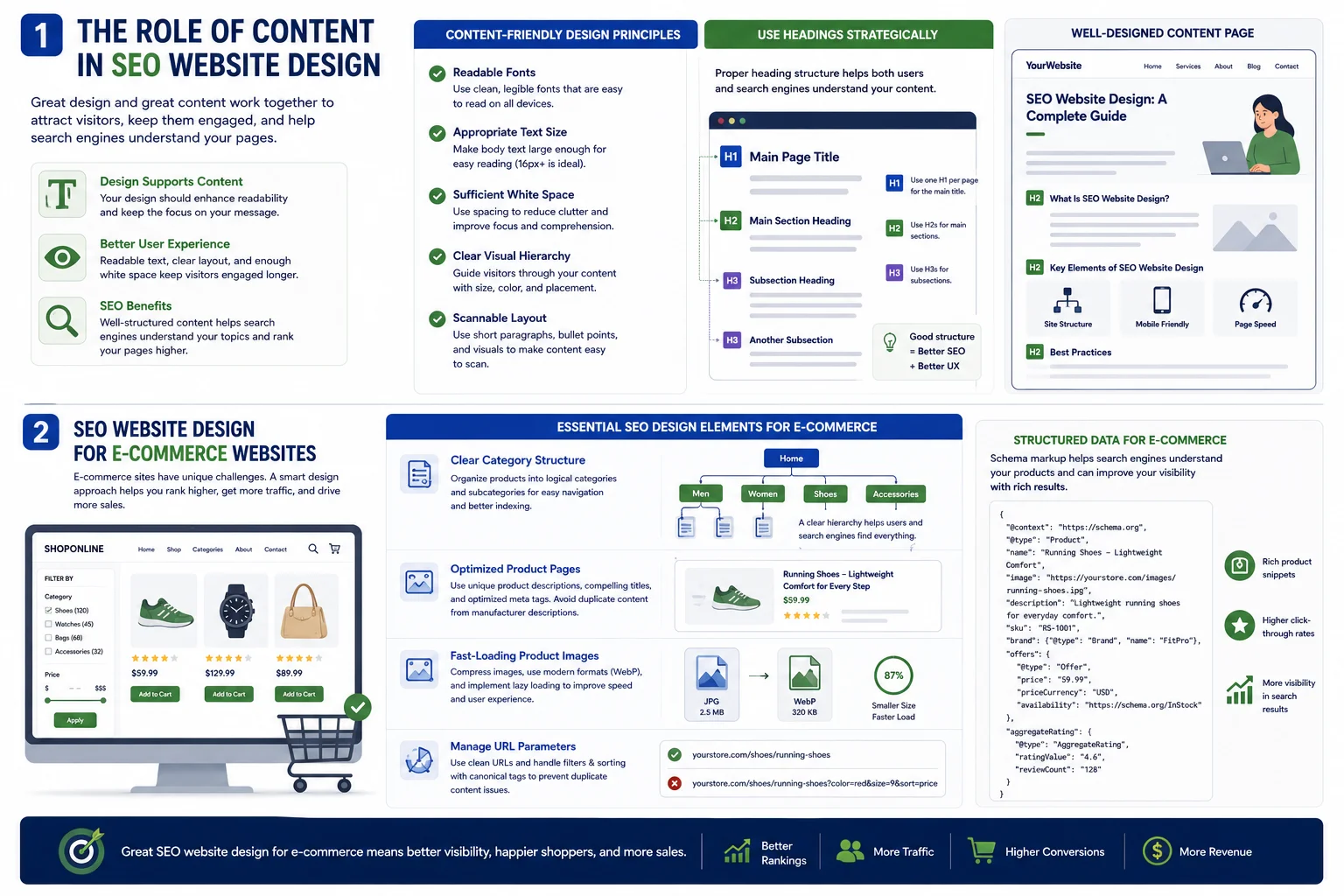
SEO Website Design for E-Commerce Websites
E-commerce websites face unique SEO website design challenges, given the large number of product pages, category pages, and often complex filtering systems involved. Effective SEO website design for e-commerce includes clear category structures, optimized product page templates with unique descriptions, fast-loading product images, and careful management of URL parameters to avoid duplicate content issues.
Additionally, e-commerce sites benefit significantly from structured data markup for products, including pricing, availability, and review information, which can enhance how products appear in search results.
Measuring the Success of SEO Website Design
Once your website has been designed with SEO principles in mind, it’s important to track relevant metrics to measure its effectiveness. Key performance indicators to monitor include organic search traffic, page load speed, Core Web Vitals scores, bounce rate, average session duration, and keyword rankings over time.
Tools like Google Search Console and Google Analytics can provide valuable insights into how your website is performing in search results and how users are interacting with your site once they arrive. Regularly reviewing this data allows you to make informed adjustments to your design and content strategy over time.
Frequently Asked Questions
What is SEO website design in simple terms?
SEO website design is the practice of building a website with search engine optimization principles considered from the very start, rather than adding SEO as an afterthought once the site is complete.
Is SEO website design different from regular SEO?
Yes. Regular SEO often refers to ongoing activities like content creation, link building, and keyword optimization, while SEO website design specifically focuses on the technical and structural design decisions made during the website-building process.
Does good design really affect SEO rankings?
Yes. Design choices directly influence factors like page speed, mobile responsiveness, and Core Web Vitals, all of which play a role in how search engines evaluate and rank websites.
Can I improve an existing website’s SEO through design changes?
Absolutely. While it’s easier to build SEO principles in from the start, existing websites can often see significant improvements by addressing issues like site structure, page speed, and mobile responsiveness after the fact.
Do I need a professional designer to implement SEO website design?
While it’s possible to learn and apply many of these principles yourself, working with a designer or developer who understands both web design and SEO can help ensure your website is built on a solid technical foundation from day one.
Final Thoughts: Why SEO Website Design Matters
At its core, SEO website design is about creating websites that work well for both search engines and real human visitors. It’s not about choosing between beautiful design and strong SEO performance—it’s about integrating the two so that your website looks great, functions smoothly, and has the technical foundation needed to rank well in search results.
As search engines continue to prioritize user experience alongside traditional ranking factors, the importance of SEO website design will only continue to grow. Whether you’re planning a new website or looking to improve an existing one, investing time in getting the design and SEO fundamentals right from the start will pay off in the form of better rankings, happier visitors, and long-term organic growth.