
10 Essential Features Every Real Estate Website Needs
Learn how a professional real estate website with property listings, advanced search, mobile-friendly design, and lead generation features can help grow your property business.
Good real estate website design is no longer optional. Many buyers and sellers search online before they contact an agent or visit a property. If your business does not have a professional website, you may miss opportunities to connect with potential clients.
However, a successful property listing website needs more than an attractive look. It should offer easy navigation, useful property information, advanced search options, a mobile-friendly layout, and simple ways for visitors to contact your team.
Whether you are a real estate agent, property dealer, broker, or agency, here are 10 essential features your website should include.
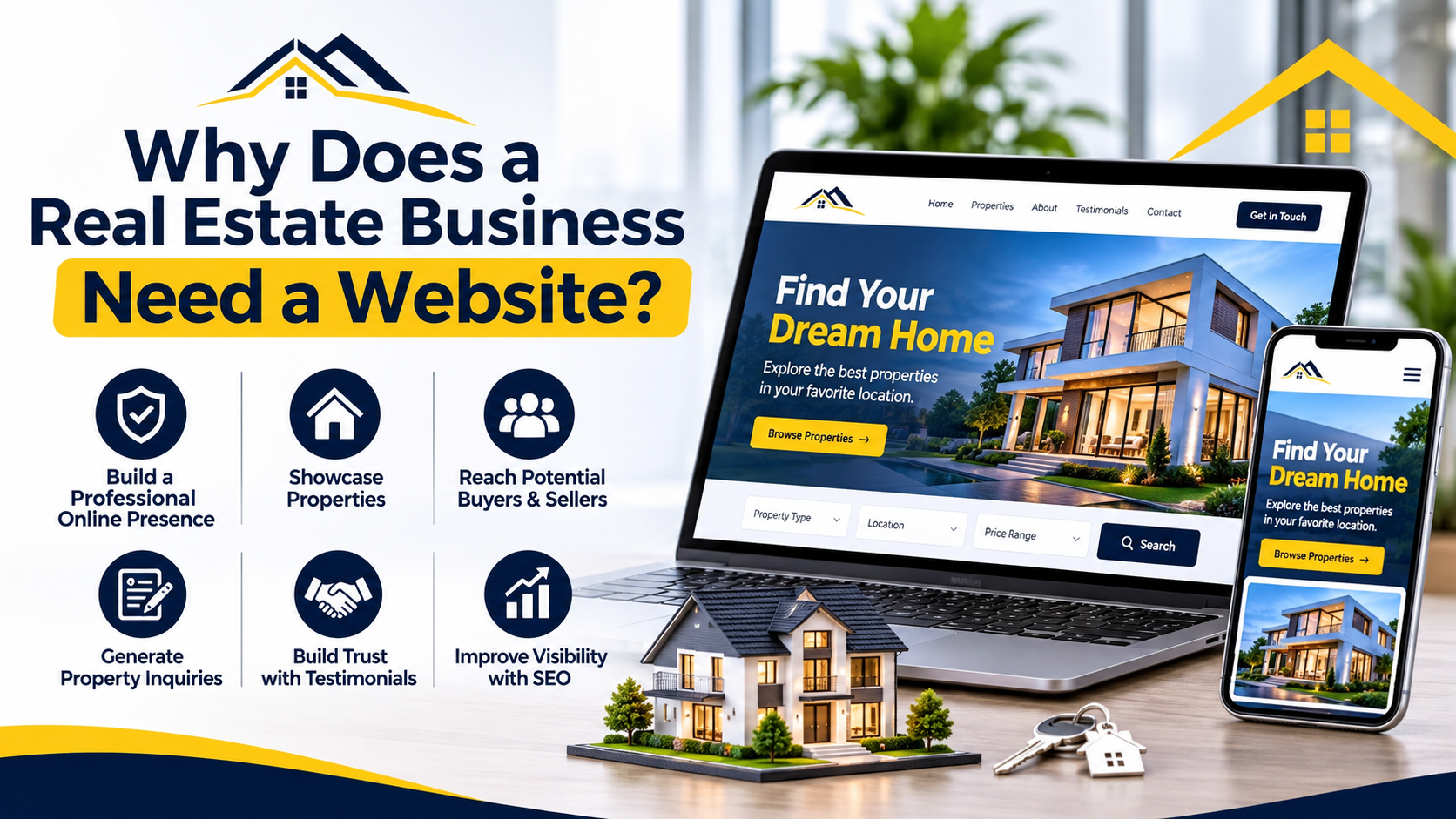
Why Does a Real Estate Business Need a Website?
A professional website gives your business a central place to present its services, properties, and contact details. Unlike social media profiles, your website gives you full control over how your business is presented.
A real estate website can help your business:
- Build a professional online presence
- Showcase properties in one organized place
- Reach potential buyers and sellers
- Generate property inquiries
- Build trust through company information and testimonials
- Improve visibility through search engine optimization
With the right design and functionality, your website becomes an important part of your marketing strategy.
Alt text: Professional real estate website design displayed on a desktop screen.
1. Easy Property Search and Filters
Property search is one of the most important features of a real estate website. Visitors should be able to find suitable properties without going through dozens of unrelated listings.
Useful search filters include:
- Location or city
- Property type (house, apartment, commercial space)
- Minimum and maximum price
- Number of bedrooms and bathrooms
- Sale or rental options
- Property size
For example, someone looking for a three-bedroom house in a specific city should be able to narrow down results in seconds.
2. Professional Property Listings
Property listings are the heart of a real estate website. Each property should have its own dedicated page with accurate and useful information, including:
- Listing title
- Sale or rental price
- Complete location
- Bedrooms, bathrooms, and size
- Detailed description
- Available facilities and features
- A clear inquiry option
3. High-Quality Property Images and Videos
People want to see a property before arranging a visit. Your website should display clear photographs of:
- Exterior views
- Living rooms and bedrooms
- Kitchens and bathrooms
- Gardens and outdoor spaces
- Parking and other facilities
4. Mobile-Friendly Website Design
Many people browse properties on their smartphones, so your website must work smoothly on mobile, tablet, and desktop. Visitors should be able to browse listings, use filters, view images, and contact agents without unnecessary zooming.
Important mobile features include:
- Responsive page layouts
- Easy navigation menus
- Readable text and clear buttons
- Properly displayed property images
- Mobile-friendly inquiry forms
- Click-to-call and WhatsApp options
5. Property Inquiry and Lead Generation Forms
Your website should make it easy for interested visitors to contact you. An inquiry form lets them ask questions, request more details, or book a property viewing.
A useful form includes:
- Full name
- Email address
- Phone number
- Property of interest
- Message
Keep the form short. Asking for too much information discourages visitors from submitting it. Add WhatsApp buttons
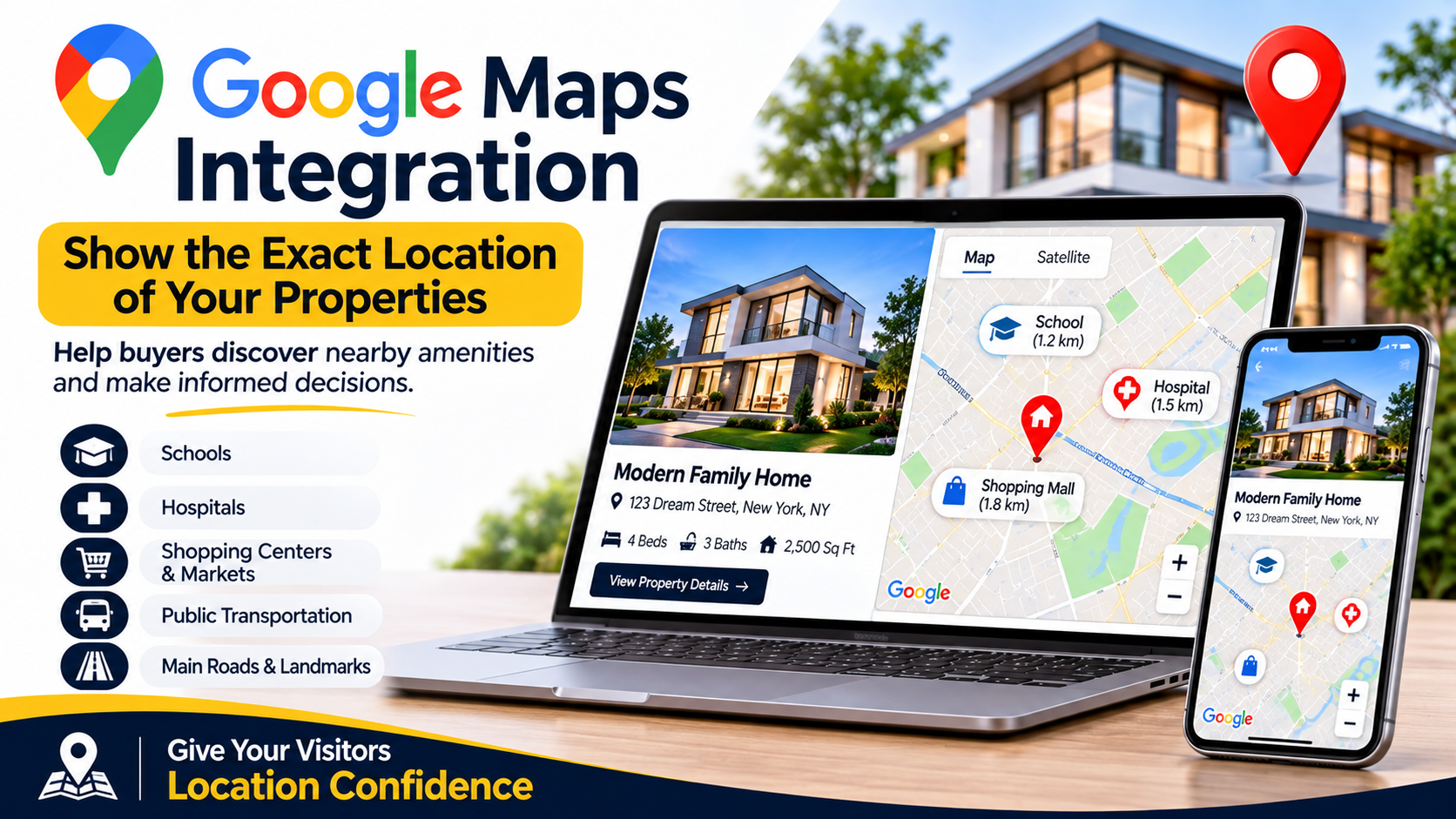
6. Google Maps Integration
Location is one of the biggest factors in property decisions. An embedded Google Map helps visitors see exactly where a property is and what is nearby, such as:
- Schools and hospitals
- Shopping centers and markets
- Public transportation
- Main roads and landmarks
Someone buying a family home will want to know how close it is to schools and workplaces. Showing this information makes your listings more useful.
7. Agent Profiles and Contact Information
Visitors want to know who they are dealing with before making an important decision. Professional agent profiles introduce your team and make it easy to get in touch.
Each profile can include:
- Professional photograph
- Name and designation
- Short biography
- Areas of expertise
- Contact number and email
- Properties handled by the agent
Also include your company address, business phone number, email, and social media links. Clear contact details build credibility.
8. Fast Loading Speed
Visitors may leave if pages take too long to load, especially on mobile. A slow website also creates a frustrating experience.
To improve performance:
- Compress property images
- Use reliable web hosting
- Enable browser caching
- Reduce unnecessary plugins
- Use an optimized theme and clean code
- Test website speed regularly
9. SEO Optimization
Real estate web design should support search visibility from the start. SEO helps search engines understand your content and show it to people searching for properties.
Important SEO practices include:
- Descriptive page titles and unique meta descriptions
- Proper heading structure
- Optimized image alt text
- Clean URLs
- Relevant internal links
- Useful property and area-related content
A well-optimized website gives you a stronger foundation for organic traffic. However, rankings depend on competition, website quality, relevance, and many other factors.
10. Secure and User-Friendly Design
Visitors should feel comfortable browsing your website and submitting their contact details. Important security and usability features include:
- SSL certificate (HTTPS)
- Secure forms
- Regular WordPress updates
- Reliable backups
- Strong administrator passwords
- Clear navigation and page structure
- Accessible buttons and readable content
If your website collects personal information, handle it responsibly and explain how it is used.
Final Thoughts
A successful real estate website should do more than display property photos. It should help visitors discover properties, understand key details, explore locations, and contact your business easily.
From search filters and professional listings to mobile responsiveness, lead forms, and SEO, every feature contributes to a better user experience. Investing in professional real estate website development can help your business build a stronger online presence and create more opportunities to connect with clients.
Need a Professional Real Estate Website for Your Business?
Looking for a website that showcases your properties and connects you with potential buyers?
WP Development Service can build a modern, responsive, and user-friendly real estate website tailored to your business.
CTA Button: Get a Free Website Consultation